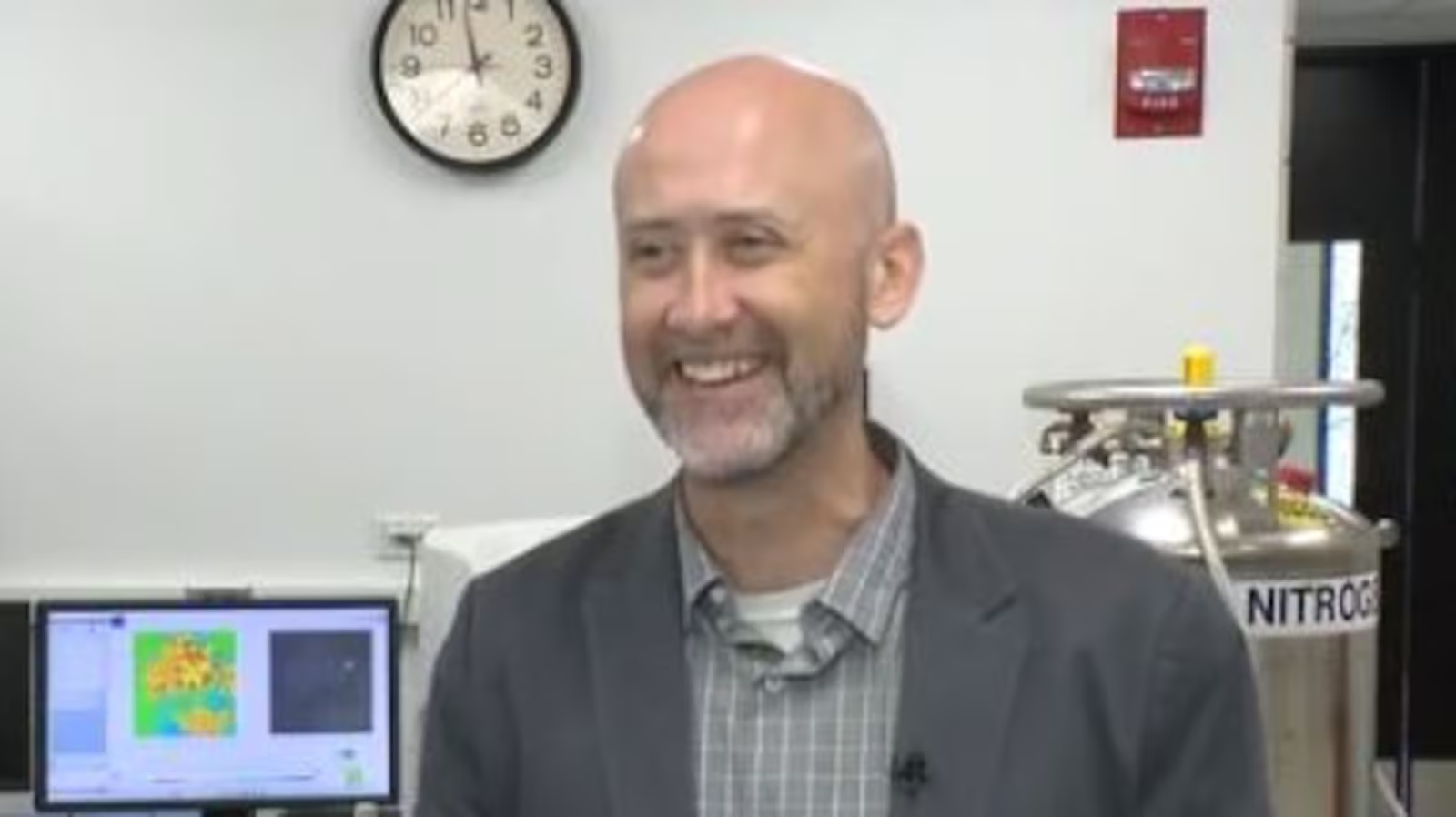
Timothy Glotch, a professor at Stony Brook University, has been chosen as one of ten scientists from across the United States to help guide research planning for upcoming Artemis missions to the moon. CTV
A professor from Stony Brook University has received exciting news from NASA just days after the launch of Artemis II.
Timothy Glotch, a planetary geologist based on Long Island, now joins a select group of scientists shaping the future of human exploration on the moon. NASA chose only ten experts from across the United States for this important role.
A Life-Changing Call
Glotch learned about his selection during a call from NASA’s exploration leaders on Wednesday. The moment left a lasting impression on him.
“I was over the moon,” he said. “My heart was racing, I couldn’t wipe the smile off my face for the entire day.”
His work will support upcoming Artemis missions, including a planned 2028 trip that aims to explore the moon’s south pole. Scientists believe this region holds valuable resources such as minerals and water ice.
Building a Future on the Moon
Glotch will help astronauts identify useful materials on the lunar surface. His research will also support efforts to build a long-term human presence on the moon.
“Artemis is being built from the ground up to be sustainable,” he said. “I’m excited to bring Artemis to Stony Brook and teach classes.”
NASA plans to use these missions to prepare for deeper space travel, including future journeys to Mars. The agency continues to focus on building systems that can support astronauts for extended periods beyond Earth.
Hands-On Science and Teaching
Glotch remains deeply involved in research and education. He plans to bring his experience into the classroom, giving students a closer look at real-world space science.
During a recent discussion, he demonstrated his work using lunar dust samples. These samples came from missions carried out by Apollo program astronauts more than 50 years ago.
Wearing gloves to protect the materials, he explained how even tiny samples can reveal important details about the moon.
“We can take this tiny little amount of sample and use it to inform our global perspective,” he said. “By studying the moon, we learn more about the Earth.”
Staying Grounded on Earth
Although his work focuses on space exploration, Glotch does not plan to travel to the moon himself.
“I don’t even like tall roller coasters,” he said. “I’m happy to do my science here on Earth.”
Instead, he will continue to support missions from the ground, using his expertise to guide astronauts and improve scientific understanding.
Looking Ahead
NASA’s Artemis program marks a new chapter in space exploration. With experts like Glotch contributing to research and planning, the agency moves closer to returning humans to the moon and building a lasting presence there.