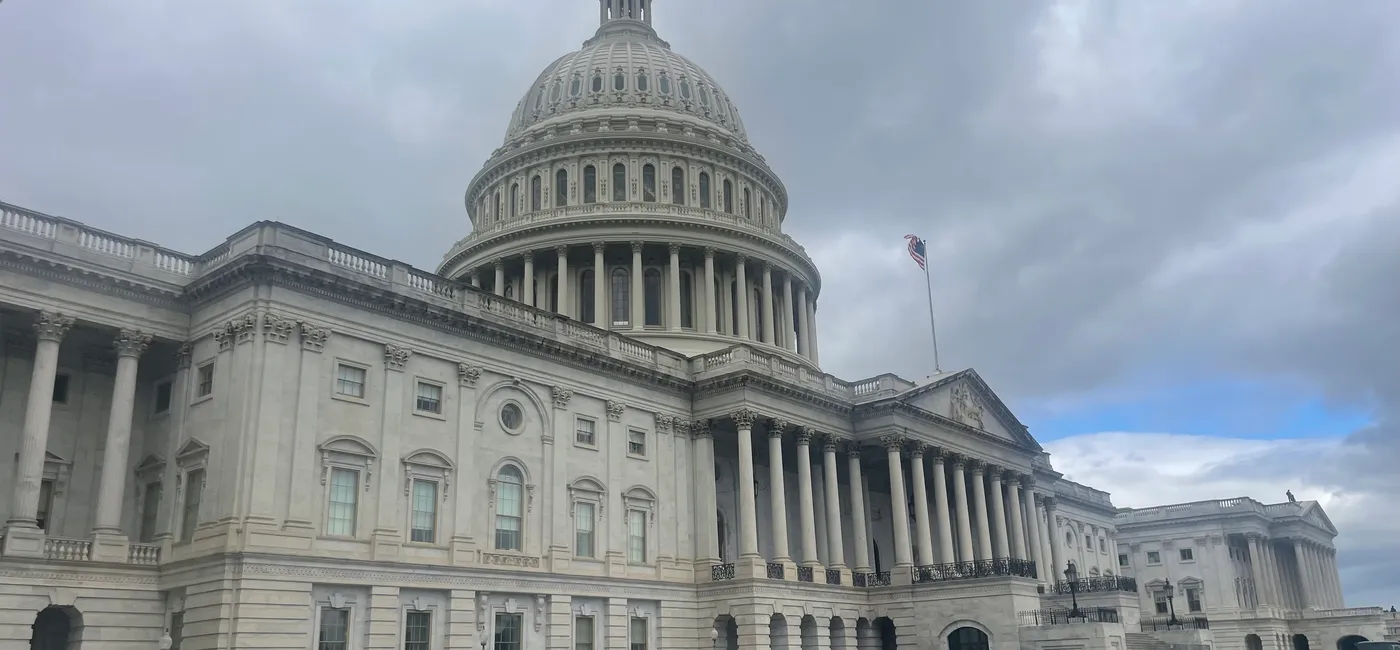
The U.S. Capitol in Washington, D.C. Travel Pulse
Two U.S. Senators have introduced a new bill aimed at improving cooperation between the United States, Canada, and Mexico to support the travel and tourism industry. The proposed legislation, known as the USMCA Travel and Tourism Resiliency Act, would ensure that the tourism sector is given the attention it needs during the upcoming review of the United States-Mexico-Canada Agreement (USMCA).
Addressing the Struggles of the Travel Industry
After a challenging year for the travel and tourism industry in the U.S., particularly in places like Las Vegas, the new bill seeks to address declining international visitation. The bill’s focus comes after Canadian visits to the U.S. dropped by 26% over the past year, highlighting a significant downturn in travel between the U.S., Canada, and Mexico. In response, U.S. Senators Catherine Cortez Masto (D-Nev.) and Jerry Moran (R-Kan.) introduced the bill on February 5, with the goal of ensuring that travel and tourism become a priority during trade discussions.
Senator Cortez Masto emphasized the importance of tourism to the U.S. economy, particularly in Nevada, which heavily relies on visitors. “Travel and tourism are vital not only to Nevada’s economy, but to the economy of the United States as a whole,” she said. “As we’ve seen over the past year, tariffs, trade, and international cooperation play a large role in either promoting or deterring international travel.” She also pointed out the need to invite Canada and Mexico to actively support the U.S. travel industry.
A Gap in the USMCA Agreement
The USMCA, which was launched in 2020 to promote trade and cooperation across several sectors between the three North American countries, did not originally include a focus on travel and tourism. This gap left the tourism industry without a dedicated framework for collaboration under the trade agreement. The new bill aims to close that gap by requiring the U.S. Trade Representative to create a Travel and Tourism Trade Working Group. This group would be formed as part of the USMCA’s ongoing review process, providing a structured way for the three countries to discuss and advance tourism interests.
Industry Support for the Initiative
The U.S. Travel Association has voiced strong support for the bipartisan bill, seeing it as a key step in addressing the challenges faced by the industry. Erik Hansen, Senior Vice President of the U.S. Travel Association, noted that the decline in international visits has had a direct impact on the economy. “This bipartisan legislation would ensure travel and tourism are prioritized in the upcoming USMCA joint review,” he said. He also emphasized that the creation of a Travel and Tourism Trade Working Group would boost cooperation among the three countries, enhance North America's global competitiveness, and provide much-needed support to millions of workers and businesses tied to the travel industry.
Expansion of the Bill to the House of Representatives
On February 10, the bill was introduced into the U.S. House of Representatives by Congressmen Gus Bilirakis (R-Fla.) and Vern Buchanan (R-Fla.). Buchanan, a senior member of the House Ways and Means Committee, underscored the importance of the tourism sector to the economy, particularly for regions that attract millions of visitors each year. “For districts like ours that welcome millions of visitors each year, tourism isn’t just an industry, it’s a driver of jobs and economic growth,” said Buchanan. He highlighted the importance of maintaining seamless travel between the U.S., Canada, and Mexico, especially as the U.S. prepares to celebrate its 250th anniversary. “That’s why I’m proud to introduce the USMCA Travel and Tourism Resiliency Act to ensure travel and tourism are fully represented during the upcoming USMCA joint review,” he added.
Conclusion
The USMCA Travel and Tourism Resiliency Act represents a step toward enhancing cross-border cooperation and supporting the recovery of the travel and tourism industry, which has faced significant challenges over the past year. By focusing on strengthening ties between the U.S., Canada, and Mexico, the bill aims to create a more resilient tourism sector, ensuring that it remains a major contributor to the economies of all three countries.