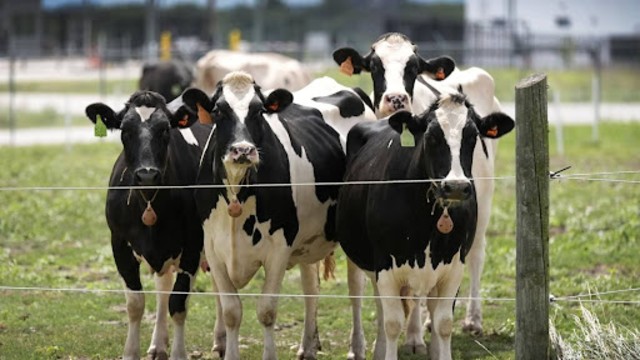
Dairy cows are seen grazing in a field near the milking barn at the USDA's National Animal Disease Center in Ames, Iowa, on Tuesday, August 6, 2024. (AP Photo/Charlie Neibergall, File)
In Nevada, dairy cows have been infected with a new strain of bird flu, marking a concerning development in the ongoing battle against the virus. This strain, different from the one that has been spreading across U.S. cattle herds since last year, has raised new alarms. The virus, part of the Type A H5N1 family, has previously jumped from wild birds to cattle, but this is the second time it's happened in the U.S., prompting experts to worry about how easily it might spread and affect both animals and the people who care for them.
Richard Webby, a leading expert in influenza at St. Jude Children’s Research Hospital, noted that while bird-to-cow transmission was once considered rare, this new detection suggests that it might be more common than previously thought. In fact, the first version of the H5N1 virus, known as B3.13, was confirmed in March after making its way into cattle in late 2023. So far, it has infected over 950 herds across 16 states.
Now, the D1.1 strain, detected in Nevada last Friday, has added to these concerns. It was found in milk samples as part of a routine surveillance program. Scientists say that testing, like this, is essential to track the virus's spread and keep people safe.
Angela Rasmussen, a virus expert from the University of Saskatchewan, stressed the importance of continued testing, especially since the D1.1 strain is linked to the first bird flu-related death in the U.S. earlier this year. A person in Louisiana died in January after coming into contact with infected wild and backyard birds. Another case was reported in Canada, where a teenage girl suffered severe illness after exposure to infected poultry.
In the U.S., at least 67 people have been infected with bird flu, with many of them working closely with cattle or dairy farms. The U.S. Centres for Disease Control and Prevention (CDC) is closely monitoring the situation, and USDA officials plan to release genetic data on the new virus strain soon.
Scientists are now investigating how long this new strain may have been circulating and whether it has been infecting cattle unnoticed for months. Michael Worobey, an evolutionary biologist at the University of Arizona, pointed out the potential risk the virus poses to global health. He emphasized that any delay in detecting such viruses could have serious consequences, comparing it to the initial stages of the COVID-19 pandemic.
Experts are calling for more urgent sharing of data, as this virus has the potential to spread widely, affecting both public health and the economy. It is crucial to stay vigilant and monitor these emerging strains to protect people, animals, and industries.