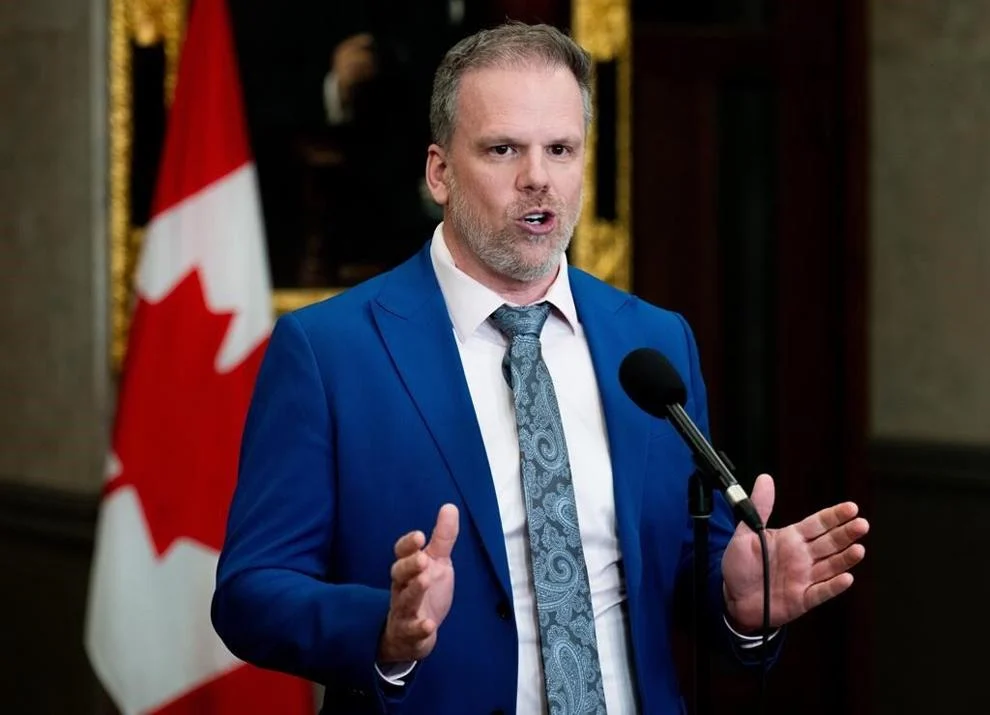
Mark Holland, minister of health, speaks to reporters in the foyer of the House of Commons on Parliament Hill in Ottawa, on Wednesday, March 20, 2024. THE CANADIAN PRESS/Spencer Colby
In Moncton, New Brunswick, both the provincial and federal governments have entered into two agreements, totaling $430 million, aimed at bolstering the province's healthcare and long-term care systems. With this agreement, Quebec remains the only province yet to formalize a healthcare deal with the federal government.
According to a statement from Federal Health Minister Mark Holland, the funds allocated to New Brunswick will support various healthcare initiatives. These include efforts to increase the number of nurses, enhance mental health and substance abuse services, and improve long-term care facilities.
Holland also highlighted the importance of the agreements in facilitating better data collection and sharing in the healthcare sector, as well as streamlining the recognition process for healthcare professionals educated abroad.
Similarly, a statement from the New Brunswick government underscored the commitment to transparency and accountability. The province has pledged to issue annual reports tracking its progress in achieving healthcare objectives.
Provincial Health Minister Bruce Fitch emphasized that these agreements represent a tailored approach to addressing healthcare challenges within New Brunswick. He expressed confidence that the initiatives would significantly enhance healthcare accessibility for residents.
The significance of these agreements lies not only in the financial support provided but also in the collaborative efforts between the provincial and federal governments. By working together, they aim to implement targeted solutions that address the specific healthcare needs of New Brunswick's population.
This development comes amid ongoing efforts across Canada to strengthen healthcare systems in response to various challenges, including an aging population, rising healthcare costs, and the impact of the COVID-19 pandemic.
In New Brunswick, like in many other provinces, healthcare remains a top priority for policymakers and residents alike. The agreements signed between the provincial and federal governments signal a shared commitment to improving healthcare outcomes and ensuring the well-being of all citizens.
Moving forward, the successful implementation of these agreements will be crucial in achieving tangible improvements in healthcare services across New Brunswick. It will require effective coordination, ongoing monitoring, and adaptability to address emerging healthcare needs effectively.
Overall, the signing of these agreements represents a positive step forward in advancing healthcare in New Brunswick. It reflects a collaborative approach to addressing complex healthcare challenges and underscores the importance of partnership between governments at different levels to achieve meaningful progress.