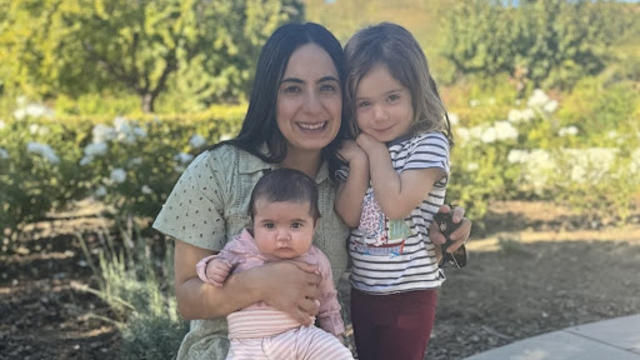
Dr. Naseem Khorram discovered she had cancer after routine blood tests during her second pregnancy.
Dr. Naseem Khorram, a Los Angeles nephrologist, was going through routine prenatal testing during her second pregnancy when something unexpected happened. The test, designed to screen for chromosome abnormalities like Down syndrome, revealed something far more concerning: unusual results in her own health.
Khorram, who was otherwise healthy and had no symptoms, was shocked when her test showed "atypical" results, meaning there was something unusual about her own health, though her baby appeared fine. These results, often linked to benign conditions like uterine fibroids, can also signal something more serious like cancer.
Her obstetrician recommended a full-body MRI to investigate further. This suggestion led Khorram to face an agonizing decision. Unfortunately, her insurance approved the scan, but the hospital where she was treated refused to perform it, as they did not offer whole-body scans. Determined to find answers, Khorram joined a National Institutes of Health (NIH) study for women with similar test results, which ultimately led to a full-body MRI. The scan revealed that Khorram had stage II Hodgkin lymphoma, a cancer of the lymphatic system.
Khorram immediately began chemotherapy but continued her pregnancy, managing to complete her treatment just two weeks before her daughter was born. "It’s easy to be terrified by these results," Khorram said, "but I encourage people to advocate for themselves." Thankfully, she is now cancer-free, focusing on spending time with her husband and two young daughters, ages 3 and 4 months.
The NIH study, published this month in the New England Journal of Medicine, examined 107 women with unusual prenatal DNA-sequencing results. Nearly half (48.6%) of these women were found to have undiagnosed cancers, including lymphoma, colorectal, and breast cancers. The study suggests that prenatal DNA sequencing, which analyzes DNA fragments from the placenta, can sometimes reveal hidden cancers in mothers, as tumours also release DNA into the bloodstream.
Dr. Diana Bianchi, a senior author of the study, emphasized that the study shouldn’t cause panic among pregnant people. It’s important to note that the chaotic patterns seen in the results are not common but can indicate the need for further testing, such as MRI scans. The study found that some cancers could be detected through this additional testing, potentially saving lives.
Doctors caution that the chaotic patterns in DNA sequencing may be the most critical red flag, and further diagnostic work should be considered if such a pattern appears. The study is pushing for more attention to be given to these atypical results, as timely action can prevent the spread of cancer.
Khorram, now cancer-free, continues to urge doctors and healthcare systems to take such results seriously and act quickly. She believes a clear protocol is necessary, so people like her do not fall through the cracks.
Her experience, and the study's findings, highlight an important message: routine tests can sometimes reveal more than expected, and when something is off, it’s crucial to get the right follow-up care.