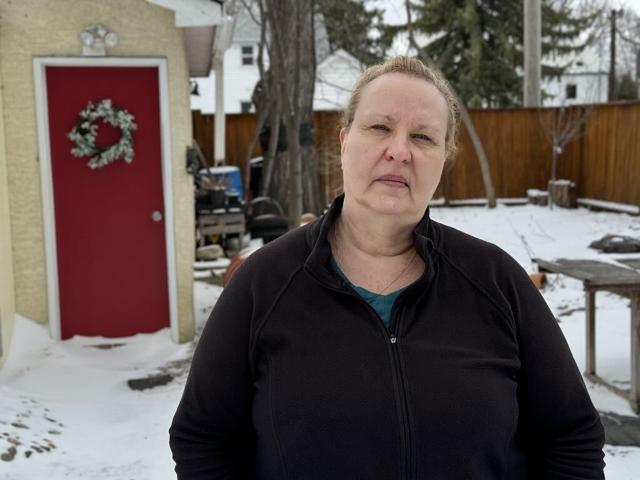
Nuelle Novik poses for a portrait at her home in Regina, Friday, April 19, 2024.THE CANADIAN PRESS/Jeremy Simes
In rural Saskatchewan, communities like Macoun and Lloydminster are grappling with a persistent challenge: retaining family doctors. Suzanne Kuchinka, Mayor of Macoun, expresses the ongoing struggle as doctors retire or relocate elsewhere. Similarly, Mayor Gerald Aalbers of Lloydminster highlights the hurdles facing doctors wishing to practice in their area. These issues underscore broader healthcare concerns in small Saskatchewan towns.
A recent report, focusing on rural healthcare in the province, sheds light on the magnitude of the problem. Over four years, hundreds of service disruptions occurred due to staffing shortages, accompanied by morale issues among healthcare workers. Kuchinka's poignant statement, "We're dying for doctors," resonates at an annual meeting of municipal leaders in Regina. Aalbers echoes this sentiment, citing the case of a Lloydminster doctor unable to practice locally, opting for New Brunswick instead.
The report, spearheaded by the Saskatchewan Population Health and Evaluation Research Unit at the University of Regina, draws insights from various sources, including government records, media coverage, interviews, and virtual group discussions. Funded by the Canadian Union of Public Employees Local 5430, the research aims to provide an objective analysis of the rural healthcare landscape.
Key findings from the report include 533 service disruptions in rural areas with union staff over a four-year period, leading to temporary hospital closures or reduced operating hours. These disruptions force patients to seek care further away, exacerbating wait times in larger cities. The impact extends beyond inconvenience, placing strain on urban healthcare systems ill-equipped to handle increased demand.
Personal anecdotes underscore the gravity of the situation. Kuchinka recounts having to travel to Regina to give birth due to inadequate services in nearby Estevan. The reliance on internationally trained doctors, who often use rural communities as a stepping stone, further exacerbates the problem. Kuchinka suggests proactive measures such as engaging high school students and offering tuition relief to incentivize careers in medicine.
Low morale among rural healthcare workers emerges as another pressing issue. While Saskatchewan recruits contract nurses from other provinces to address staffing shortages, pay disparities and scheduling conflicts have led to discontent among local nurses. A recent plea from Saskatoon nurses highlights the urgency of the situation, urging the provincial government to address pay differentials and prioritize local staff.
In response, the Saskatchewan government has implemented measures to attract healthcare professionals to rural areas, including higher pay incentives and increased training opportunities. Nurse practitioners are proposed as a viable solution to alleviate strain on hospital resources, with plans to add 25 positions in the coming year. However, details regarding the distribution of these positions remain unclear.
The report also raises concerns about the amalgamation of Saskatchewan's health regions into a single authority, limiting staff's access to management. Additionally, the lack of rural transportation further compounds healthcare challenges, following the discontinuation of the provincial bus service in 2017. Novik emphasizes the need for sustained investment in rural healthcare, cautioning against temporary fixes that fail to address underlying systemic issues.