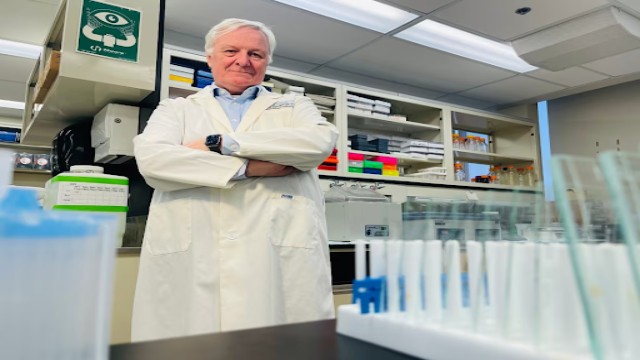
Jim Woodgett's lab focus includes the causes and treatment of breast cancer and liver cancer. He said details of NIH research funding seem to change by the second. ( Craig Chivers/CBC)
Canadian researchers are growing anxious as uncertainty looms over U.S. federal health funding (U.S. research funding freeze) under the Trump administration. A potential pause in financial support could stall crucial medical advancements in areas like cancer, dementia, and vaccine research—affecting scientists not just in the U.S. but also in Canada.
The U.S. National Institutes of Health (NIH), a powerhouse of global scientific funding, had a budget of $47 billion last year, with over $40 million of it directed to Canadian researchers. However, recent developments have cast doubt on the stability of this critical support system.
A Sudden Halt in Research Decisions
On January 21, the Trump administration imposed a temporary communication freeze on federal health officials, leaving researchers in limbo. At the NIH, key meetings responsible for determining funding allocation were abruptly canceled with no rescheduling in sight. Adding to the confusion, an NIH grant-funding webpage hinted at unspecified changes that could impact research projects, fellowships, and training grants submitted after January 25.
The turbulence didn’t end there. The administration initially froze hundreds of billions of dollars in federal grants and aid earlier this week, only to reverse the decision two days later. This back-and-forth has left many scientists—both in the U.S. and Canada—uncertain about the future of their work.
Researchers Face Funding Anxiety
Among those caught in this whirlwind is Dr. Steffanie Strathdee, a Canadian scientist based at the University of California San Diego. She is awaiting approval for a $12 million NIH grant for her HIV prevention research, which includes studies conducted in Canada. With her upcoming adjudication meeting now in jeopardy, Strathdee is deeply concerned.
"When I saw NIH dollars were frozen, I was stunned," she admitted.
Her work, which tracks long-term drug use trends to inform HIV and hepatitis C prevention strategies, relies heavily on continuous funding. The recent disruptions have already affected researchers like her, who are grappling with delays in hiring, travel, and communication.
“At best, we’re looking at significant funding delays, which puts the livelihoods of my students and staff in both the U.S. and Canada at risk,” Strathdee explained.
Long-Term Impacts on Medical Research
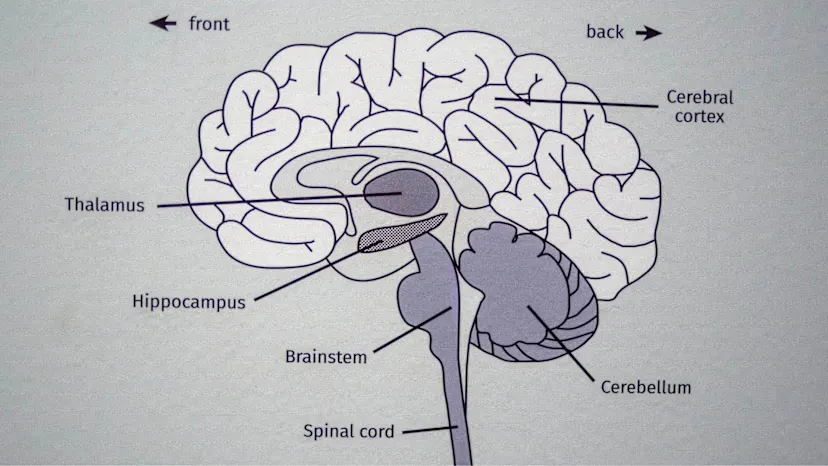
The uncertainty has also sent ripples through Canadian universities. Dr. Nathan Spreng, a professor at McGill University, is worried about the future of his NIH-funded research on brain aging, loneliness, and Alzheimer’s disease.
“The real consequence here is human suffering,” Spreng said. “Without this funding, people living with untreated diseases will continue to suffer.”
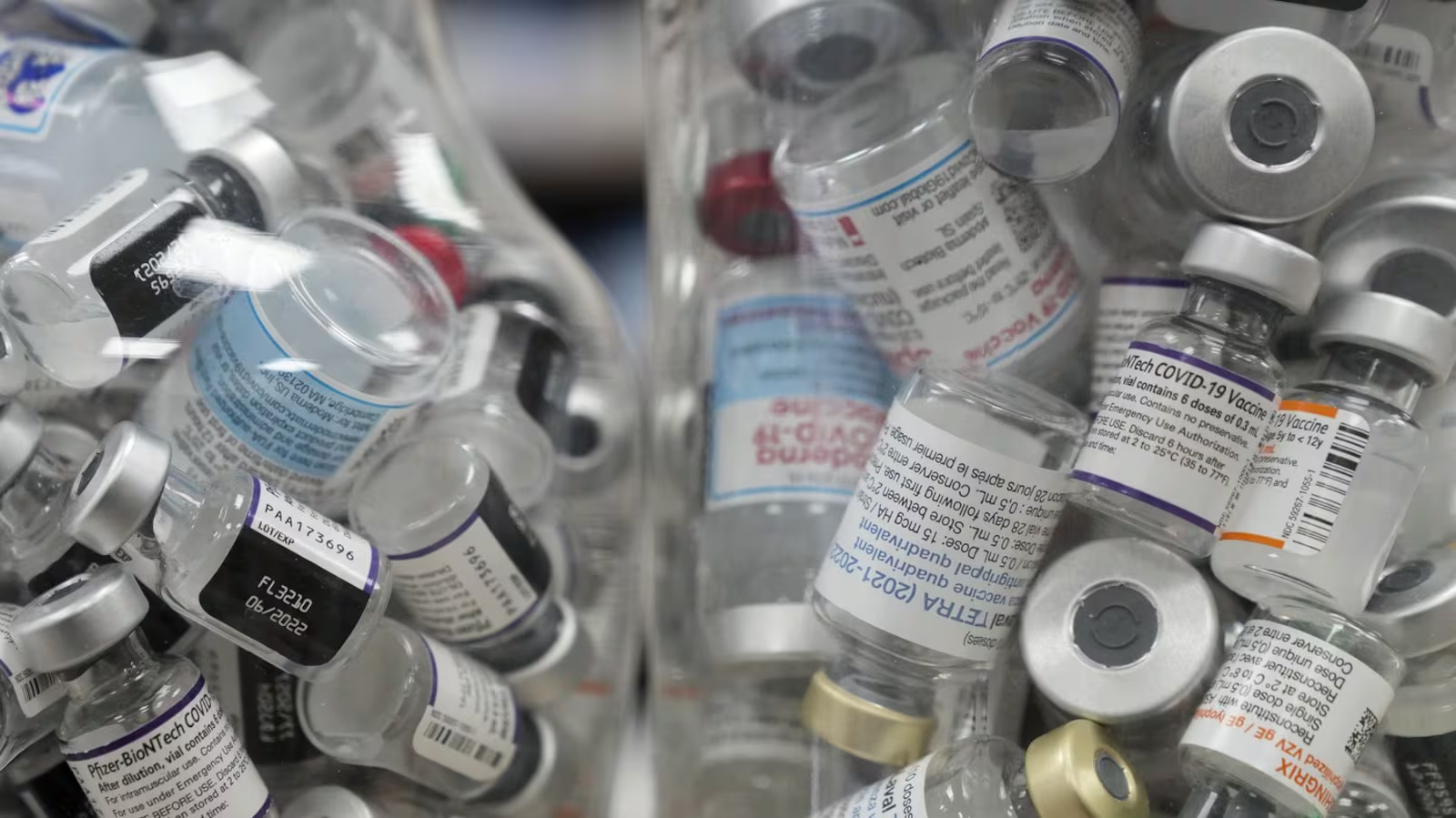
NIH-backed research has been instrumental in medical breakthroughs, contributing to 354 of the 356 FDA-approved drugs between 2010 and 2019, according to a 2023 JAMA Health Forum study. A funding freeze could stifle future innovations, leading to fewer treatments and a stagnation in medical advancements.
A ‘Brain Gain’ Opportunity for Canada?
Jim Woodgett, a cancer researcher at Toronto’s Lunenfeld-Tanenbaum Research Institute, describes the situation of the U.S. research funding freeze as “putting a freeze on science.” The Canadian Institutes for Health Research, Canada’s primary medical research funder, operates with an annual budget of about $1.4 billion—significantly lower than the NIH’s $47 billion. However, some see this as an opportunity for Canada to step up.
Strathdee believes Canada could benefit from the uncertainty in the U.S. by attracting top scientific talent. “This could be a moment for brain gain instead of brain drain,” she suggested.
A spokesperson for Canada’s Ministry of Innovation, Science, and Industry confirmed that the government is closely monitoring the situation. Meanwhile, Strathdee, who commutes between San Diego and Toronto, is considering her future.
“If the U.S. continues to erode its public health infrastructure, I’ll have to rethink where I invest my career,” she said.
For now, scientists on both sides of the border are bracing for the potential fallout, hoping that funding stability is restored before research—and lives—are put at further risk.