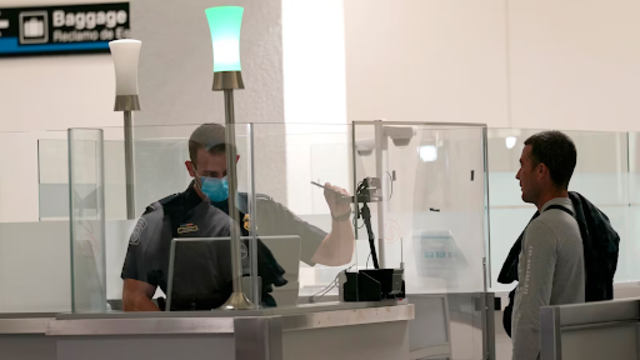
Travellers from abroad arrive at Miami International Airport, where U.S. Customs and Border Protection officers conduct screenings on Friday, Nov. 20, 2020, in Miami. (AP Photo)
The United States is seeing a sharp rise in searches of phones, laptops, and other electronic devices at its borders. Between April and July 2025, U.S. Customs and Border Protection (CBP) searched 14,899 devices. That number included 1,075 advanced searches. This marks the highest figure in recent years and nearly double the number recorded during the same period in 2018.
Although the rise is significant, officials stress that these searches affect only a small portion of travellers. Last year, more than 400 million passengers entered U.S. ports of entry, and only 0.01 per cent of them had their devices checked.
Non-U.S. citizens most impacted
CBP data shows that non-U.S. travellers face these checks far more often than Americans. About 78 per cent of those who had their devices examined last year were foreign nationals. The agency says its officers have the authority to inspect anyone crossing the border, but actual searches remain limited in scale.
What searches involve
Most searches are basic checks, where officers manually look through the device. CBP disables Wi-Fi, Bluetooth, and mobile data before starting, to ensure they don’t access remote information. In more serious cases, agents carry out advanced searches. These involve connecting the device to external equipment to copy or analyze its contents.
Officers may use advanced methods if they suspect a law violation or a security threat. On average, advanced searches make up about 10 per cent of total checks each year.
Rules for travellers
According to CBP, all travellers must present their devices if asked. This includes providing access through passcodes or fingerprints. Those who refuse may still be allowed into the country, but officers can seize the device. Refusal may also influence the final decision on entry.
CBP insists it follows strict rules to ensure searches are fair and respectful. Officials say they balance security concerns with the rights of travellers.
Growing concerns
Despite these reassurances, the increase in searches has raised alarm. Civil rights advocates and travellers worry about privacy and the broad discretion given to border officers. Some fear that device checks may go beyond criminal investigations.
Canada even updated its travel advice in April, warning visitors about possible device inspections at U.S. entry points. The notice urges travellers to cooperate fully with border authorities. It also warns that those denied entry may be detained until deportation.
Cases of concern
Recent incidents highlight why some travellers feel uneasy. In one case, a French scientist travelling to Houston was denied entry after officers examined his phone and laptop. Reports suggest the issue came from messages on his device that criticized U.S. policies.
Immigration lawyers warn that border agents have broad power to admit or deny entry. Decisions may sometimes rest on personal judgment, leaving travellers with little recourse.
Why searches happen
CBP defends the practice, saying device checks help uncover serious crimes. The agency says it uses the information to fight terrorism, drug trafficking, child exploitation, and human smuggling. Officials argue that searches also ensure compliance with immigration laws.