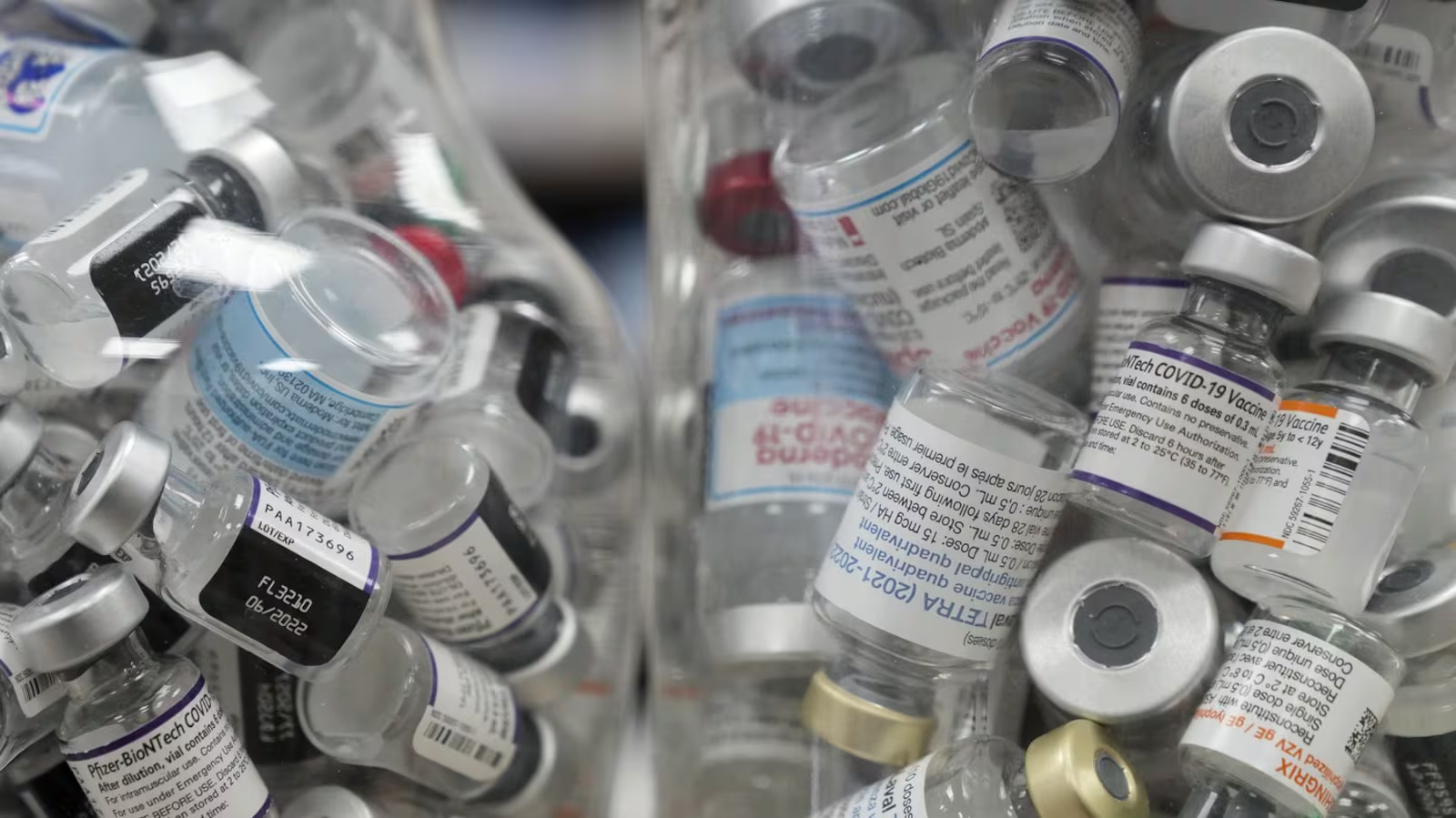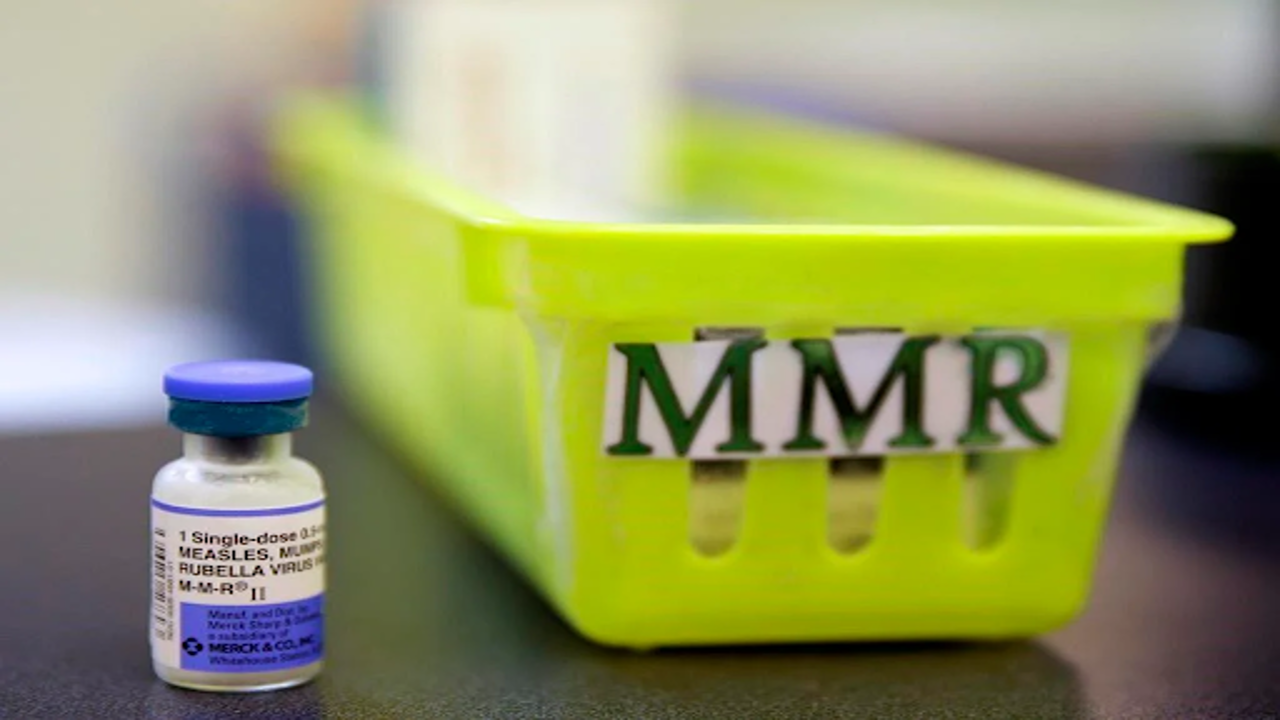
A vial of a measles, mumps and rubella vaccine sits on a countertop at a pediatrics clinic in Greenbrae, Calif., on Feb. 6, 2015. (AP Photo/Eric Risberg, The Canadian Press File)
U.S. kindergarten vaccination rates fell last year, while the percentage of children receiving exemptions reached a record high, according to federal data released Wednesday.
The rate of kindergartners with exemptions rose to 3.3%, up from 3% the previous year. Meanwhile, 92.7% of children received their required vaccines, slightly lower than the previous two years. Before the COVID-19 pandemic, the vaccination rate was 95%, a level that helps prevent disease outbreaks.
Though the decline may seem small, health officials say it translates to around 80,000 children who weren’t vaccinated. This drop in vaccination rates has been linked to increasing cases of diseases like whooping cough and measles, according to Dr. Raynard Washington, chair of the Big Cities Health Coalition. He noted that outbreaks have been occurring across the country, posing a challenge for public health officials.
The CDC’s data for the 2023-2024 school year shows a decrease in vaccination coverage for MMR, DTaP, polio, and chickenpox in more than 30 states. Kindergartners are a key focus for health officials since schools can easily spread germs, leading to community outbreaks.
For years, school attendance requirements helped maintain high vaccination rates. All U.S. states require children to be vaccinated against diseases like measles, mumps, polio, tetanus, and chickenpox to attend school or child care. While states allow medical exemptions, most also permit exemptions for religious or nonmedical reasons. Over the last decade, the percentage of kindergartners with nonmedical exemptions has gradually risen, doubling the overall exemption rate since the 2011-2012 school year.
Exemption rates vary by state, influenced by local policies and attitudes. For instance, 14.3% of kindergartners in Idaho had vaccine exemptions, compared to less than 1% in Connecticut and Mississippi. Clusters of unvaccinated children in specific communities or schools increase the risk of outbreaks, according to health behavior expert Noel Brewer.
The recent decline in vaccination rates is partly attributed to misinformation and skepticism that emerged during the COVID-19 pandemic. This trend has already been observed in cities like Louisville, Kentucky, and a CDC report last week noted declining rates among 2-year-olds. With cases of measles, whooping cough, and flu-related deaths rising, health officials are concerned about the impact of reduced vaccine coverage.