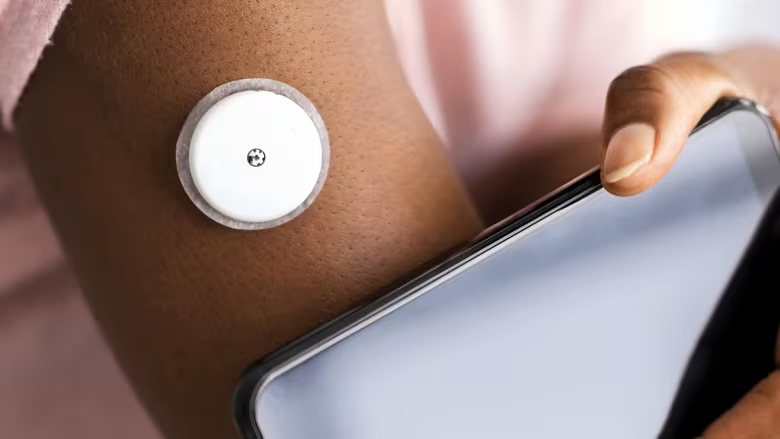
A woman testing glucose level with a Continuous Glucose Monitor. The devices were developed for people with diabetes but are now being marketed as biometric wearable technology. (Pond5). CBC News.
Even health enthusiasts are trying out wearable tech bands to monitor blood glucose.
Continuous glucose monitors (CGMs), initially designed to aid individuals with diabetes in managing blood sugar levels, are now entering the wearable tech scene alongside watches, bracelets, and rings collecting personal health data.
Researchers say the device might be able to provide minute-by-minute readings of glucose levels to health enthusiasts. Manufacturers are marketing CGMs to non-diabetic individuals, including elite athletes seeking every-minute glucose readings to optimize their training nutrition. These coin-sized devices, typically placed at the back of the upper arm, require replacement every two weeks, translating to an annual cost of around $3,500.
While CGMs are crucial for diabetics, helping them balance blood sugar levels, researchers question their benefits for healthy individuals. CGMs measure glucose levels in the extracellular space around cells, providing constant feedback. In the burgeoning realm of wearable health technology, these devices join fitness trackers measuring steps, heart rate, and sleep trends. The concept of quantifying personal health metrics is gaining attention, even featured on popular talk shows like the Joe Rogan Experience.
Timothy Caulfield, a health law and policy expert at the University of Alberta, labels these measurements as part of the "science-y wellness" trend within the longevity movement. However, he emphasizes that there is no evidence supporting the idea that constant monitoring makes people healthier.
For diabetics, CGMs are essential in preventing dangerous glucose fluctuations that can lead to unconsciousness or other severe consequences. However, for healthy individuals, the necessity of continuous glucose monitoring is unclear. Dr. Peter Senior of the Alberta Diabetes Institute suggests that occasional glucose level checks may be sufficient for those without diabetes.
There's a common assumption that blood sugar levels should remain stable all the time, but Senior points out that even healthy people may experience temporary increases after certain foods. Without a clear understanding of what "normal" glucose levels are for non-diabetic individuals, the continuous use of CGMs may not offer substantial benefits.
Dietitian Abby Langer adds that individuals should question the clinical relevance of these metrics, emphasizing that owning a glucose monitor may cause unnecessary anxiety and fear around food choices. Instead, she advocates for a balanced and varied diet, regular physical activity, adequate sleep, and finding joy in life as more direct ways to maintain health and prevent diabetes.