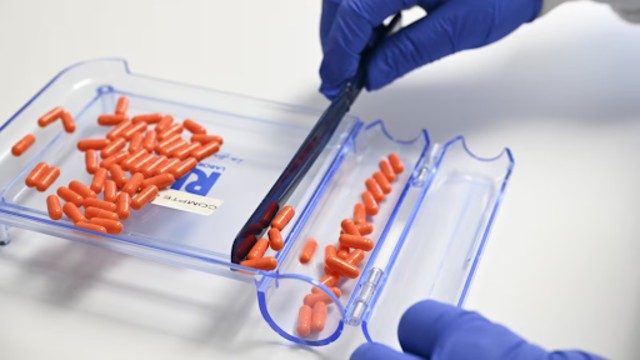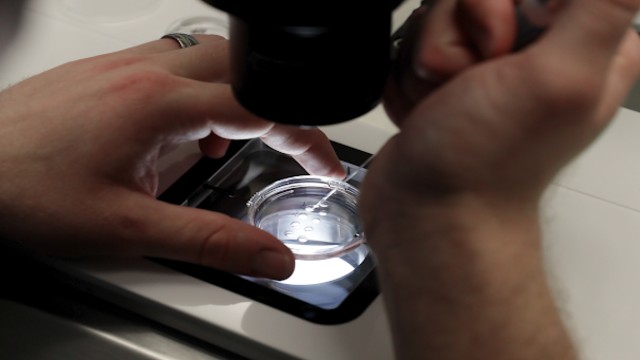
Lab staff prepare small petri dishes, holding embryos, for cells to be extracted to test for viability at the Aspire Houston Fertility Institute Feb. 27, 2024. (AP Photo)
A quiet revolution is taking place in fertility science—and it just welcomed eight new lives into the world, the new IVF trial!
In a groundbreaking clinical trial in the U.K., eight babies have been born using an advanced IVF method that significantly lowers the risk of inheriting certain genetic diseases. The success of this world-first trial offers real hope for mothers carrying faulty mitochondrial DNA, who once faced the heartbreaking reality of passing serious health conditions to their children.
Why Mitochondrial Diseases Matter
Mitochondrial diseases affect about 1 in 5,000 births. These are not minor issues. The conditions linked to mitochondrial mutations can be severe—ranging from muscle weakness and diabetes to heart rhythm problems and vision loss. Worst of all, they are currently untreatable.
The new technique aims to change that.
A Bold New Approach to IVF Trial
This isn’t your typical IVF. The procedure involves using healthy mitochondrial DNA from a donor egg, which is combined with the mother’s egg and the father’s sperm. The result? An embryo with a much lower risk of carrying mitochondrial defects.
Some have dubbed the babies born from this technique as “three-parent babies.” But that’s a stretch. Only about 0.1% of the child’s DNA comes from the donor, and it’s strictly mitochondrial—not the kind that affects personality, traits, or appearance.
Britain was the first country to approve this approach back in 2015. After years of careful planning and oversight, the long-awaited results are finally here.
What the Trial Revealed
Out of 22 women who underwent the treatment at the Newcastle Fertility Centre, eight gave birth—four boys and four girls. The children are now between six months and two years old.
In six of these babies, the amount of faulty mitochondrial DNA was slashed by 95–100%. In the other two, the reduction was still strong—between 77% and 88%. These levels are well below what’s considered dangerous.
So far, the children are all healthy. One had a minor heart rhythm issue that was treated successfully. Still, researchers say continued monitoring is necessary to ensure no problems arise as they grow.
A New Path for Families at Risk
Experts are calling this a game-changer. Nils-Goran Larsson, a leading reproductive scientist, says this offers a “very important reproductive option” for families who’ve had few choices until now.
However, it’s not without controversy.
Mitochondrial donation is still banned in many countries, including the U.S. and France. Ethical concerns—mainly about embryo destruction and fears of future “designer babies”—continue to fuel debate.
But in the U.K., the treatment is strictly controlled. Only those with a high risk of passing on a mitochondrial condition can access it.
What’s Next?
Scientists are still learning. Some children in the study showed signs of “reversal,” where defective mitochondria creep back in later. This phenomenon is not yet fully understood, but it underscores the need for continued research and careful follow-up.
Still, for families who feared their genetics would forever define their children's health, this breakthrough feels like hope.
And hope, backed by science, is a powerful thing.