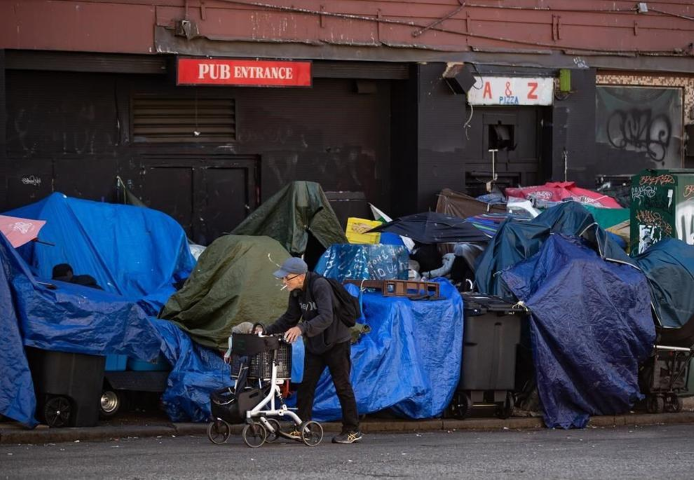
A man using a rolling walker walks on the street past tents setup on the sidewalk at a sprawling homeless encampment on East Hastings Street in the Downtown Eastside of Vancouver, on Tuesday, August 16, 2022. THE CANADIAN PRESS/Darryl Dyck
A recent study sheds light on the heightened vulnerability of homeless individuals in Ontario to developing dementia at a younger age compared to both the general population and those from low-income neighborhoods. The findings underscore the urgent need for housing support and early dementia screening initiatives tailored to this marginalized group.
Conducted using healthcare administrative data from 2019, the study analyzed information on individuals aged 45 and above who sought medical care at emergency rooms, community health centers, or hospitals. The study encompassed 12,863 homeless individuals, 475,544 individuals from low-income neighborhoods, and over 2.2 million individuals from the general population.
Published in The Lancet Public Health, the study reveals alarming statistics. The prevalence of dementia among the homeless population was found to be 1.9 times higher than that of the general population and 1.7 times higher than individuals from low-income backgrounds. Lead author Richard Booth, a scientist at ICES and the Lawson Health Research Institute, expressed concerns that these figures may underestimate the true prevalence of dementia among the homeless, as individuals may not have disclosed their housing status, particularly if they were couch-surfing or living in their vehicles.
Booth emphasized the critical need for policy changes to provide supportive housing for homeless individuals and implement early dementia screening protocols. He stressed that housing is fundamental to overall health and well-being, and without stable housing, individuals are at increased risk of experiencing adverse health outcomes, including dementia.
The study highlighted that dementia diagnoses were more prevalent among homeless individuals aged 55 to 64, underscoring the necessity for flexible screening criteria based on individuals' social and clinical circumstances. While it remains unclear whether dementia contributed to individuals becoming homeless, the study suggests a complex interplay between homelessness and various contributing factors, including neurological conditions, mental health issues, substance use disorders, and brain injuries resulting from violence or falls associated with alcohol and drug use.
Notably, the study found that 22% of homeless individuals had experienced head injuries, a rate more than triple that of the general population. The lack of affordable housing exacerbates homelessness, leading to dire outcomes for individuals with dementia who are already grappling with significant challenges related to their living conditions and health.
Dr. Martha Spencer, a geriatrician at St. Paul's Hospital, observed that homeless individuals in their 50s and 60s are exhibiting cognitive conditions typically seen in older age groups, reflecting the profound impact of homelessness on health outcomes. Standard screening tools for dementia may not be suitable for this population, prompting the need for alternative functional assessments to accurately gauge cognitive function and daily living skills.
Michelle McDonald, CEO of Brain Injury Canada, highlighted the importance of recognizing the link between intimate partner violence and head trauma, which can contribute to memory problems and potentially dementia in non-elderly individuals. She stressed the need for education and support services within women's shelters to address these underlying issues effectively.
In conclusion, the study underscores the urgent need for targeted interventions to address the elevated risk of dementia among Ontario's homeless population. By implementing housing support initiatives and early screening protocols tailored to the unique needs of this vulnerable group, policymakers and healthcare providers can work towards mitigating the adverse impact of homelessness on cognitive health outcomes.