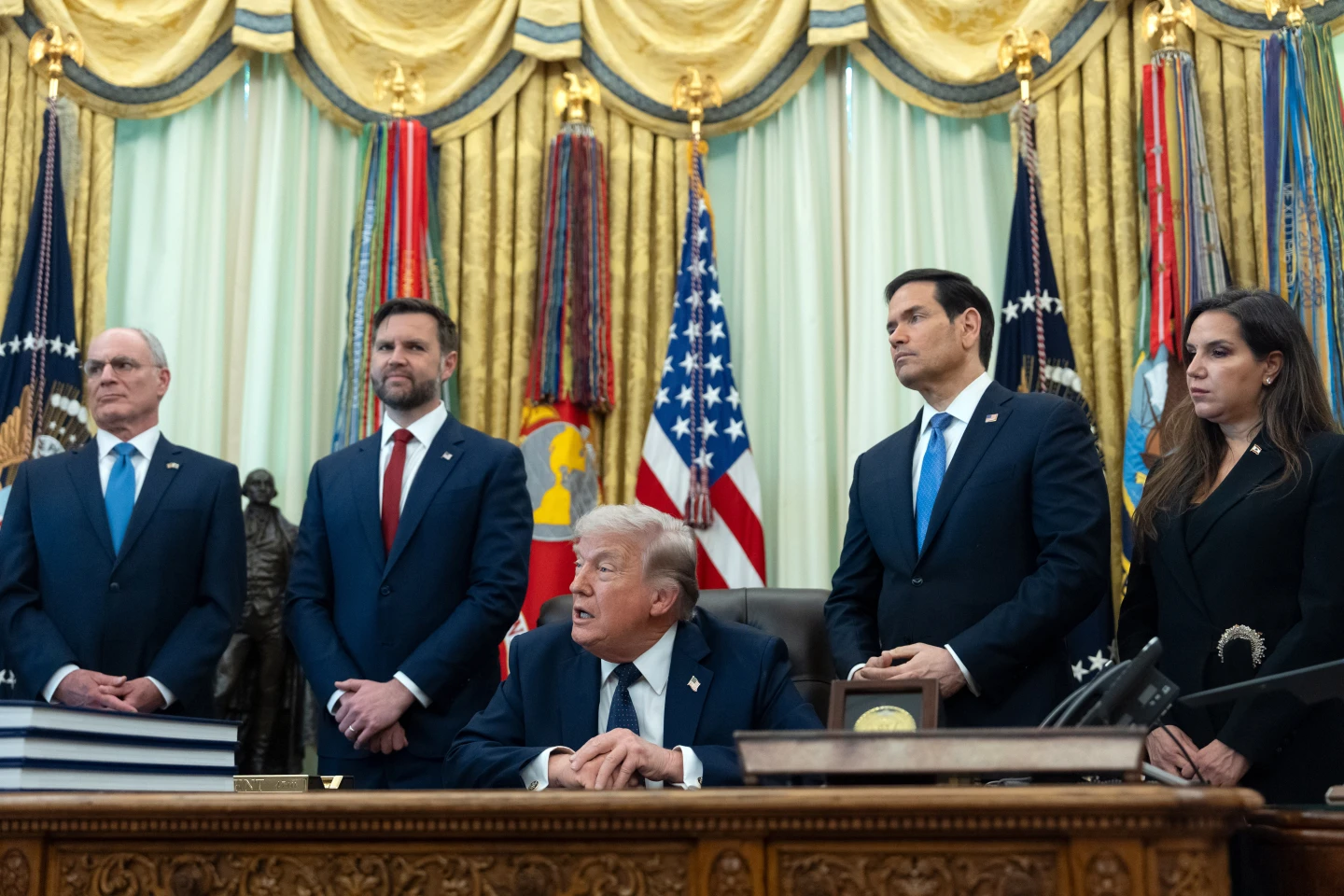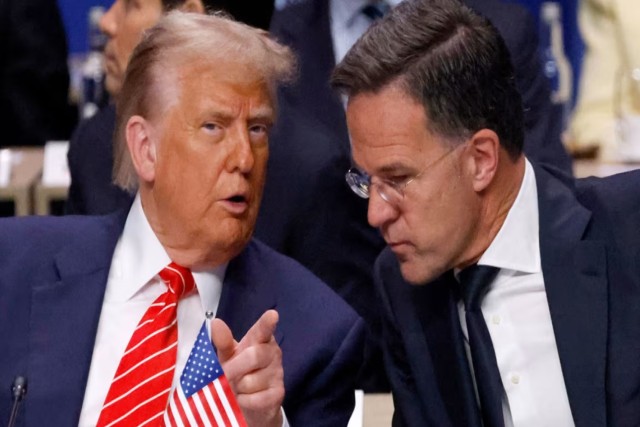
US President Donald Trump speaks with NATO Secretary General Mark Rutte as they attend the NATO summit Wednesday.
In a week where diplomacy danced on a razor’s edge, NATO pulled off what many thought impossible—thanks to a calculated charm offensive that seemed more tailored for one man than for an alliance of 31 nations. As world leaders gathered in The Hague, it became clear: the NATO summit was orchestrated to soothe, stroke, and satisfy Donald Trump.
And it worked.
Rutte's Risky Move: A Charm Offensive That Raised Eyebrows
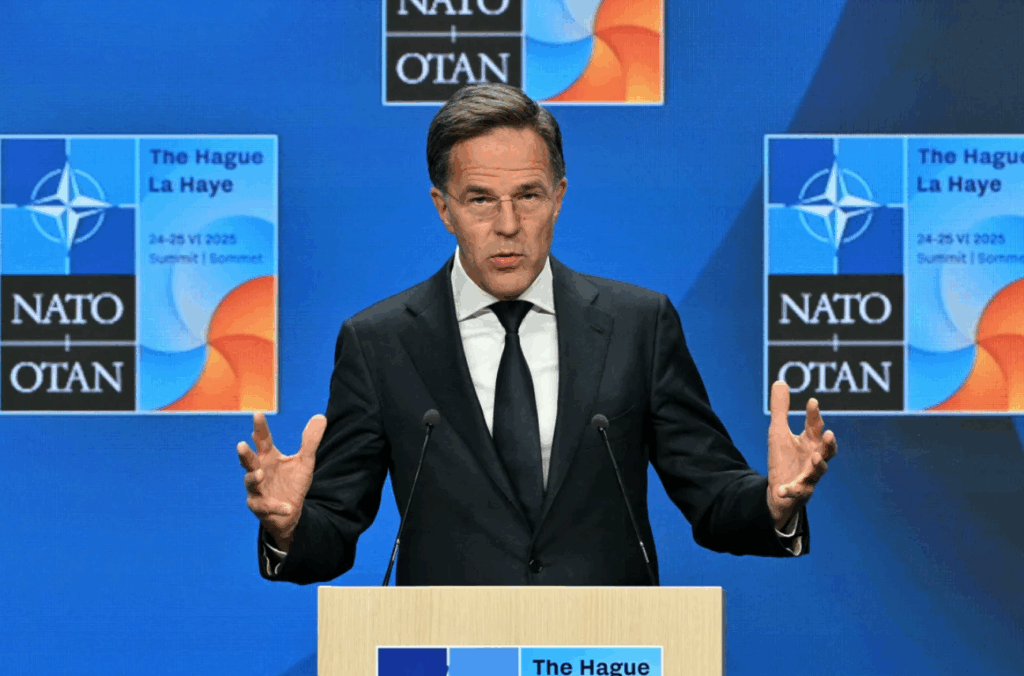
On the eve of the pivotal NATO summit, former Dutch Prime Minister and incoming NATO Secretary General Mark Rutte sent a strikingly flattering message to Trump via Truth Social.
Overflowing with praise and styled in Trump’s own tone, the post praised the former US president’s leadership, predicting a “big success” for his role in the summit.
While the message shocked seasoned diplomats, it sparked a conversation: was this flattery strategic? As the summit unfolded, it became evident that Rutte’s calculated compliments weren’t just for show—they were part of a broader NATO diplomacy strategy.
NATO Leaders Tune into Trump’s Frequency
Rutte wasn’t the only leader wooing Trump. French President Emmanuel Macron had built a rapport with him before, while Finnish President Alex Stubb used golf diplomacy. Italy’s Giorgia Meloni also impressed Trump, earning the “fantastic woman” label.
But Rutte’s approach stood out—not for friendship, but for sheer strategic purpose. Even when Trump threatened to "hit him hard" if he sensed disrespect, Rutte pressed forward, shielding Trump from backlash and guiding him through the summit minefield.
Softening Blows and Spotlighting Trump
Rutte played peacemaker when Trump’s remarks about Iran and Israel made headlines. Standing beside him, the Dutch leader joked, “Daddy has to sometimes use strong language,” smoothing over yet another diplomatic firestorm. Rutte later clarified it was just a metaphor, not a nickname.
Throughout the summit, he reinforced Trump’s narrative: praising the Iran strike and crediting him for NATO’s revived defense focus. This flattery wasn't aimless—it aligned perfectly with NATO’s goals and Trump’s ego.
Reshaping NATO Around One Man
From the summit schedule to the final declarations, everything was tailored to accommodate Trump. A shortened leader session hinted at concerns over his attention span, following his early exit from the G7 earlier that month.
Even Ukraine, once central to NATO’s discussions, was missing from the summit’s final declaration for the first time since 2022. The spotlight, instead, was placed on a single issue: defense spending. And here, Trump’s fingerprints were all over.
Trump’s 5% Goal Becomes NATO’s New Reality
Trump had long pushed for NATO allies to increase defense spending, once floating an ambitious 5% of GDP target. Though previously dismissed, the idea was now a centerpiece of the summit. By 2035, NATO nations agreed to hit that mark—including 1.5% earmarked for defense-related investment.
The commitment was a major shift, and leaders didn’t hesitate to credit Trump. Polish President Andrzej Duda called it “the success of President Donald Trump.” Lithuania went further, coining a new slogan: “Make NATO Great Again.”
Fewer Fireworks Than Expected
Despite fears that Trump’s unpredictable behavior could derail talks, the summit ended with few diplomatic casualties. Spain was one exception. Trump criticized Madrid for dragging its feet on defense commitments, even threatening trade pressure to bring them in line.
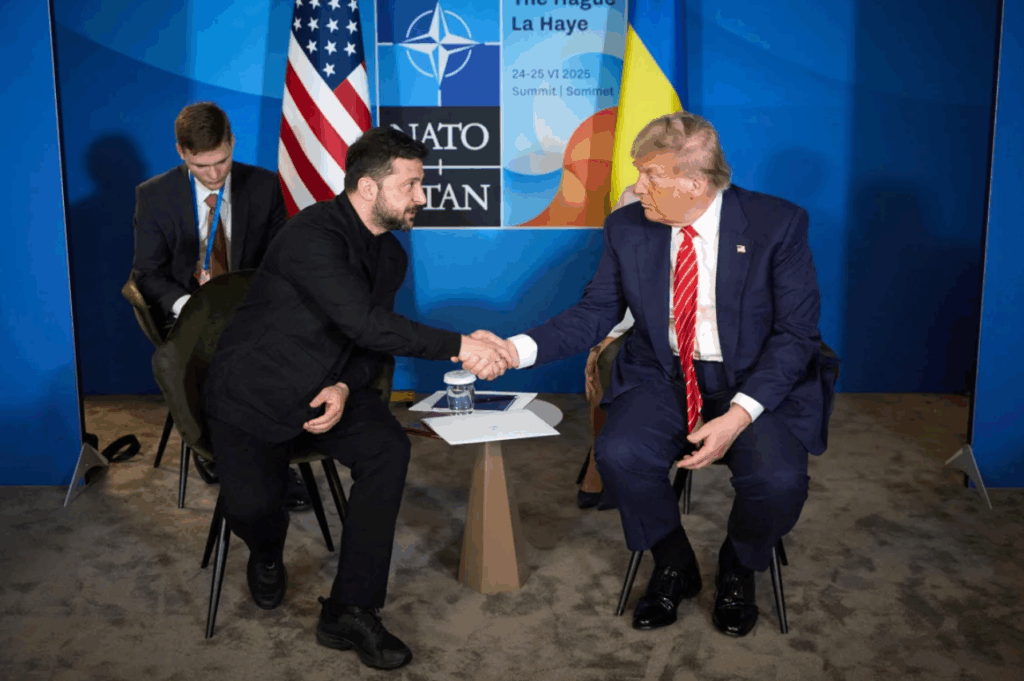
Yet, even Ukraine’s President Zelensky—who has had tense moments with Trump—left with optimism. Trump hinted at future support, including the potential delivery of Patriot missile systems. He also condemned Putin, calling him “misguided” and warning of broader territorial ambitions.
Trump’s NATO Turnaround: A Win for Everyone
In a surprising twist, Trump softened his tone on NATO by the end of the summit.
“This isn’t a rip-off,” he told the press. “These people love their countries, and we’re here to help protect them.”
While his statement surprised many, it capped a summit where strategic flattery and diplomatic choreography achieved what years of formal policy talks had not: a firm commitment to NATO's future, with Trump’s blessing.
Diplomacy by Design
Rutte’s diplomatic gamble paid off. NATO got its historic defense pledge. Trump walked away feeling respected. And, against the odds, a potentially volatile summit turned into a showcase of strategic diplomacy—with leaders putting ego management ahead of confrontation.
The keyword throughout? NATO diplomacy. Crafted, careful, and calculated—it turned out to be NATO’s most powerful tool.