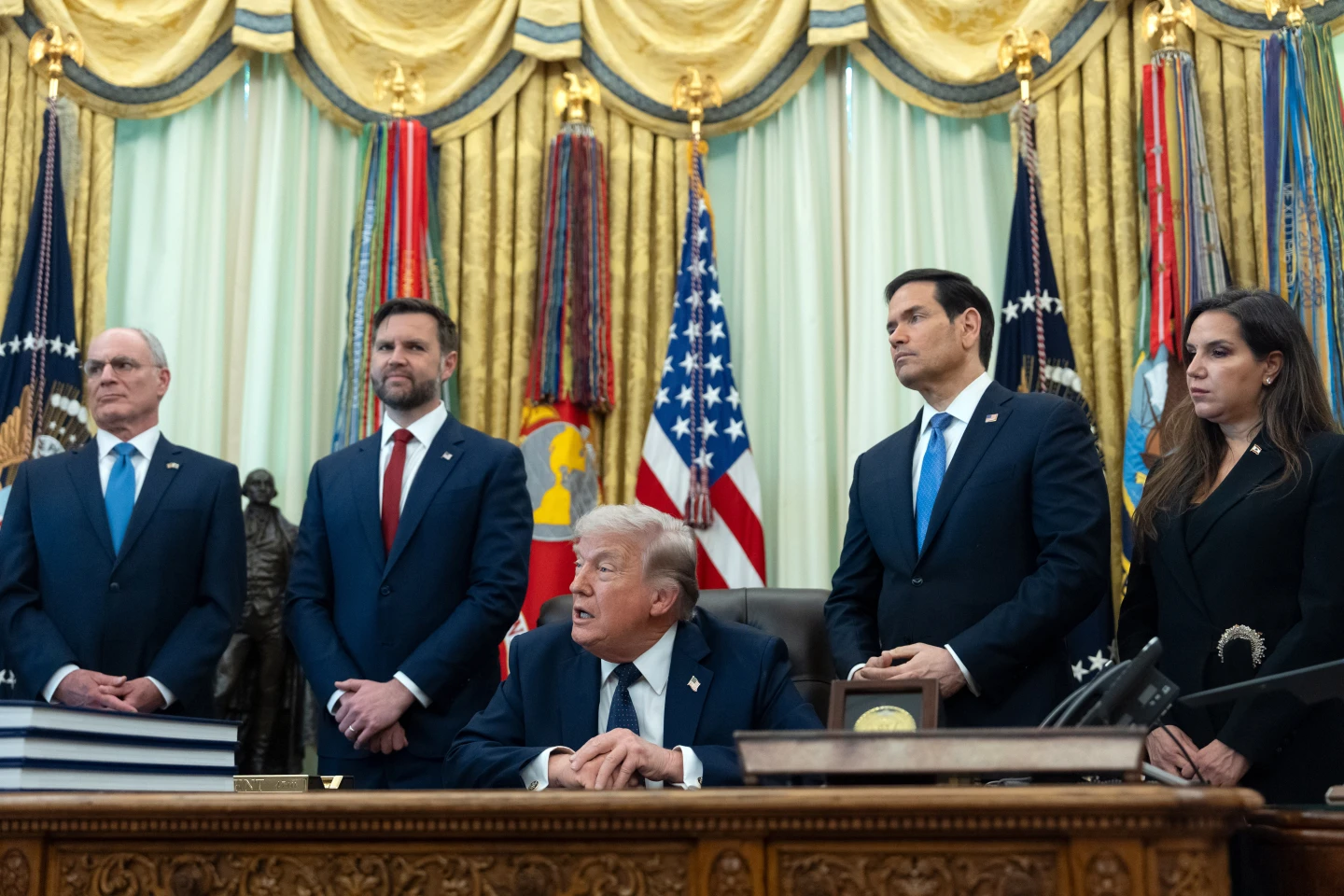
From left, Israeli Ambassador to the U.S. Yechiel Leiter, Vice President JD Vance, Secretary of State Marco Rubio, and Lebanese Ambassador to the U.S. Nada Hamadeh Moawad, listen to President Donald Trump speak in the Oval Office at the White House, Thursday, April 23, 2026, in Washington.
The Israel-Hezbollah ceasefire has been extended by three weeks after diplomatic talks in Washington, according to President Donald Trump. The announcement offers a temporary pause in a conflict that has caused heavy casualties, mass displacement, and renewed instability along the Israel-Lebanon border.
The agreement follows high-level meetings at the White House involving Israeli and Lebanese representatives, marking a rare moment of direct dialogue between two neighboring states that have officially remained at war for decades.
Israel-Hezbollah Ceasefire Gains Diplomatic Momentum
Trump described the latest round of discussions as productive and said both sides agreed to prolong the existing truce beyond its original deadline. The first ceasefire arrangement had been scheduled to expire within days, making the extension a significant diplomatic development.
Although violations have been reported since the initial pause began, officials appear determined to preserve the opening for further negotiations. Trump also signaled interest in hosting future meetings with Israeli Prime Minister Benjamin Netanyahu and Lebanese President Joseph Aoun.
The talks are especially notable because direct diplomatic contact between Israel and Lebanon has been extremely rare in recent decades, with most communication previously handled through intermediaries.
Lebanon Pushes for Wider Settlement
While the ceasefire extension offers short-term relief, Lebanon is seeking broader negotiations aimed at addressing long-standing security and humanitarian concerns. Lebanese officials want a full halt to Israeli military operations, the withdrawal of troops from occupied border areas, and the return of Lebanese detainees.
Beirut is also calling for the deployment of Lebanese forces along the frontier and support for reconstruction in areas damaged during recent fighting. These demands reflect growing pressure inside Lebanon to secure stability after months of violence.
President Aoun has indicated that the ceasefire should serve as a pathway toward a more lasting arrangement rather than a temporary pause.
Israel Focuses on Hezbollah Threat
Israeli officials continue to frame the conflict around Hezbollah’s military presence and capabilities in southern Lebanon. Foreign Minister Gideon Saar has said that peace between the two countries would be possible if Hezbollah were disarmed.
Israel maintains that its security operations are designed to prevent rocket attacks and other threats targeting northern communities. Its forces currently control a buffer zone inside southern Lebanon, which officials say is necessary to protect border residents.
At the same time, Israeli leaders have expressed willingness to continue diplomatic discussions if security concerns are adequately addressed.
Human Cost of the Conflict Remains Severe
Despite the Israel-Hezbollah ceasefire, the humanitarian toll of the war remains immense. Thousands of people in Lebanon have been killed, including civilians, while more than one million residents have been displaced.
Recent incidents during the ceasefire period have also fueled anger in Lebanon, where officials accuse Israel of continued strikes and civilian harm. The Lebanese government is reportedly considering international legal action related to alleged wartime violations.
These tensions underline how fragile the current pause remains, even as negotiations continue.
Israel-Hezbollah Ceasefire Faces Uncertain Future
One of the biggest challenges to the ceasefire is Hezbollah’s public opposition to direct diplomacy between Israel and Lebanon. Representatives from the group have indicated they may not honor agreements reached without their participation.
That stance creates uncertainty over whether political leaders can translate diplomatic progress into lasting calm on the ground. Still, the extension gives mediators additional time to pursue a broader settlement.
For now, the Israel-Hezbollah ceasefire represents a cautious step toward de-escalation. Whether it evolves into permanent peace will depend on security guarantees, political compromise, and the willingness of all parties to move beyond decades of hostility.