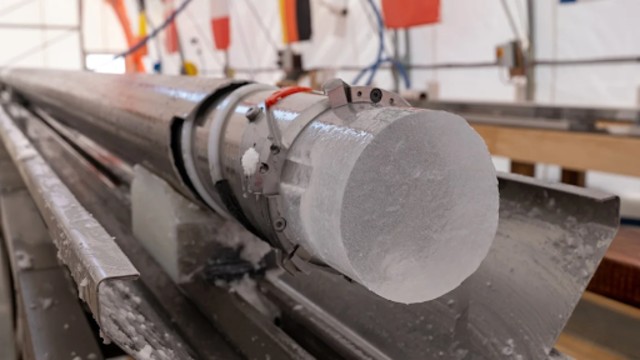
The ice core retrieved from the Little Dome C site in Antarctica is visible inside the drill. CNN
An international team of researchers has made a groundbreaking discovery in Antarctica by drilling and retrieving a 9,186-foot-long ice core that dates back 1.2 million years. This core, taken from one of the harshest regions on Earth, Little Dome C, offers scientists a rare glimpse into Earth's ancient climate. The core is an invaluable record, with the air bubbles trapped inside providing a snapshot of past atmospheric conditions, including the concentration of greenhouse gases like carbon dioxide and methane.
Carlo Barbante, a professor at Italy's Ca' Foscari University and leader of the Beyond EPICA project, which collected the core, referred to the ice as a “time machine.” It is hoped that by analyzing these air bubbles, researchers can uncover how Earth's climate responded to shifts in climate-driving factors such as solar radiation, volcanic activity, and Earth's orbit over the past 1.2 million years. This could help clarify how the planet’s climate changed and how greenhouse gases interacted with global temperatures.
One of the most intriguing aspects of this ice core is its potential to reveal the cause behind the dramatic shift in Earth’s ice age cycles that occurred around 1 million years ago. This shift has long puzzled scientists, especially given its impact on human ancestors, who faced near extinction during this period. The team is now working to uncover how and why the ice age cycles changed and what role greenhouse gases may have played in this transition.
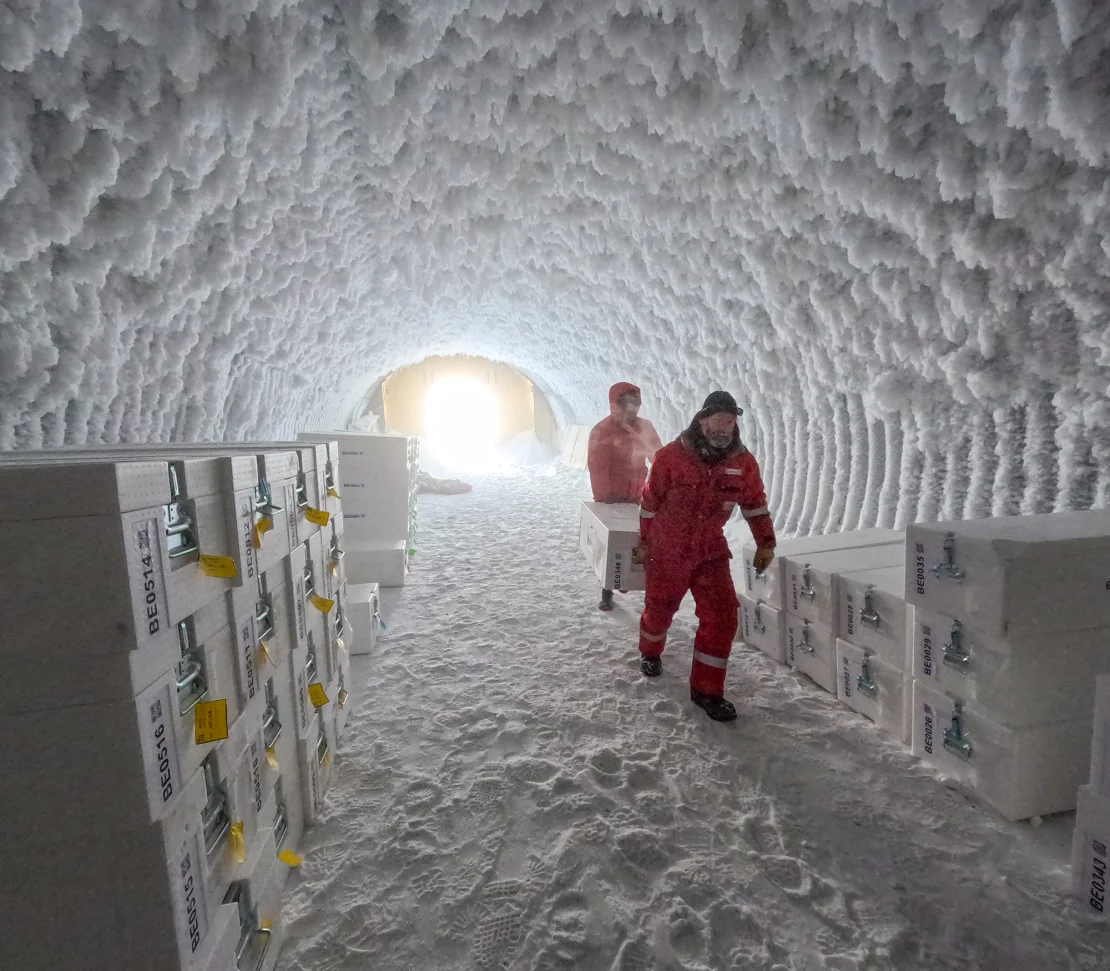
The slices of the ice core are kept in an Antarctic cave until they are ready to be sent to other research facilities for study. CNN
The research team has cut the core into manageable 3.2-foot (1-meter) slices, which are carefully stored in insulated boxes until they can be transported to other research facilities for further analysis. The ice core was retrieved during the fourth campaign of the Beyond EPICA project, which is part of a broader European initiative funded by the European Commission. This project follows in the footsteps of a similar effort called EPICA, which in the early 2000s drilled a core that revealed an 800,000-year climate record. With this new ice core, however, the team has succeeded in going even further back in time, creating an unprecedented climate record that may hold the key to understanding the Earth's climate history in far greater detail.
The core was extracted from Little Dome C, a location that sits 21 miles from the Italian-French Concordia research station. The conditions in this region are extreme, with temperatures constantly below minus 40 degrees Fahrenheit and strong winds. Despite these challenges, the team successfully drilled through the ice layers, gathering valuable data. Each meter of ice can hold up to 13,000 years of climate information, and the core reveals ancient, deeply deformed ice at its lowest layers, which may provide insights into how the ice sheet refroze over time.
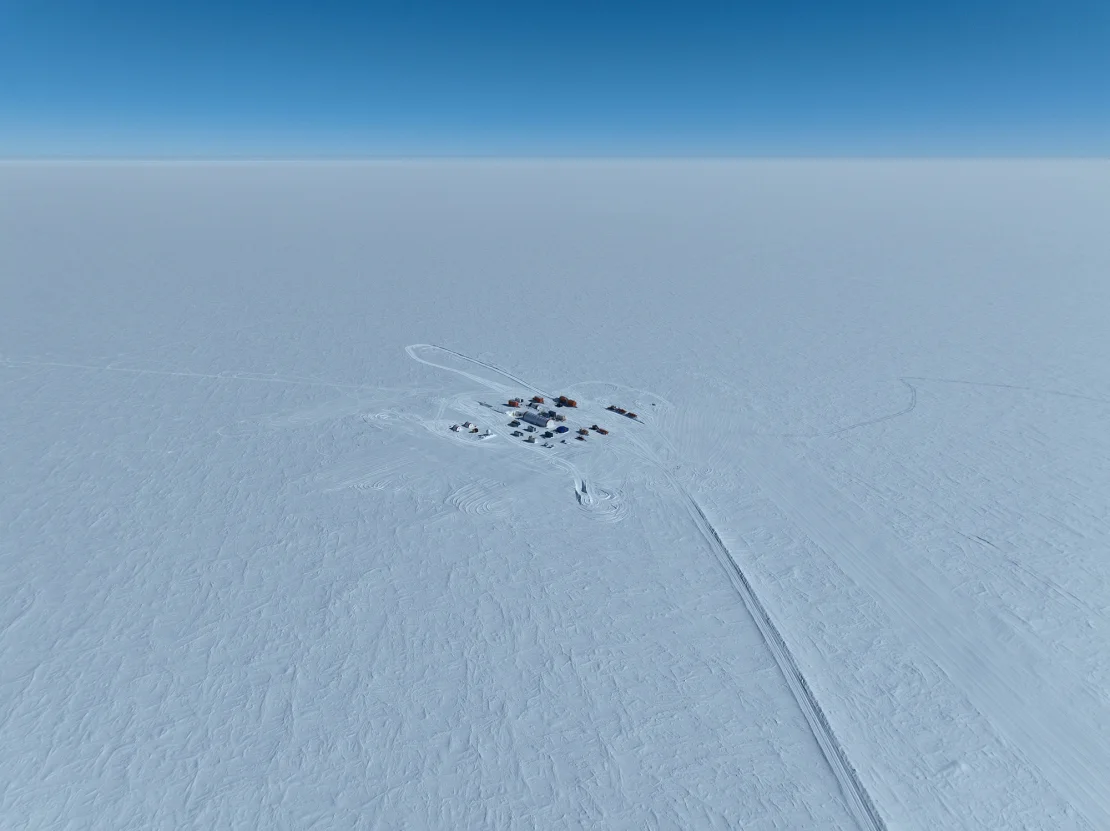
An overhead shot reveals the isolated Little Dome C location in Antarctica, where a global team extracted the ancient ice sample. CNN
The Beyond EPICA team has spent over 200 days across four summers to extract and process the ice, using radar and other technology to pinpoint the right drilling site. The ice core is thought to contain records of the Mid-Pleistocene Transition, which marks a shift in Earth's glacial cycles and is still largely a scientific mystery.
When fully analyzed, the core could provide crucial evidence about Earth’s climate during a pivotal period, helping scientists better understand the relationship between greenhouse gases and global temperatures. Furthermore, by analyzing ice cores like these, scientists can gain valuable insight into how climate change could unfold in the future.
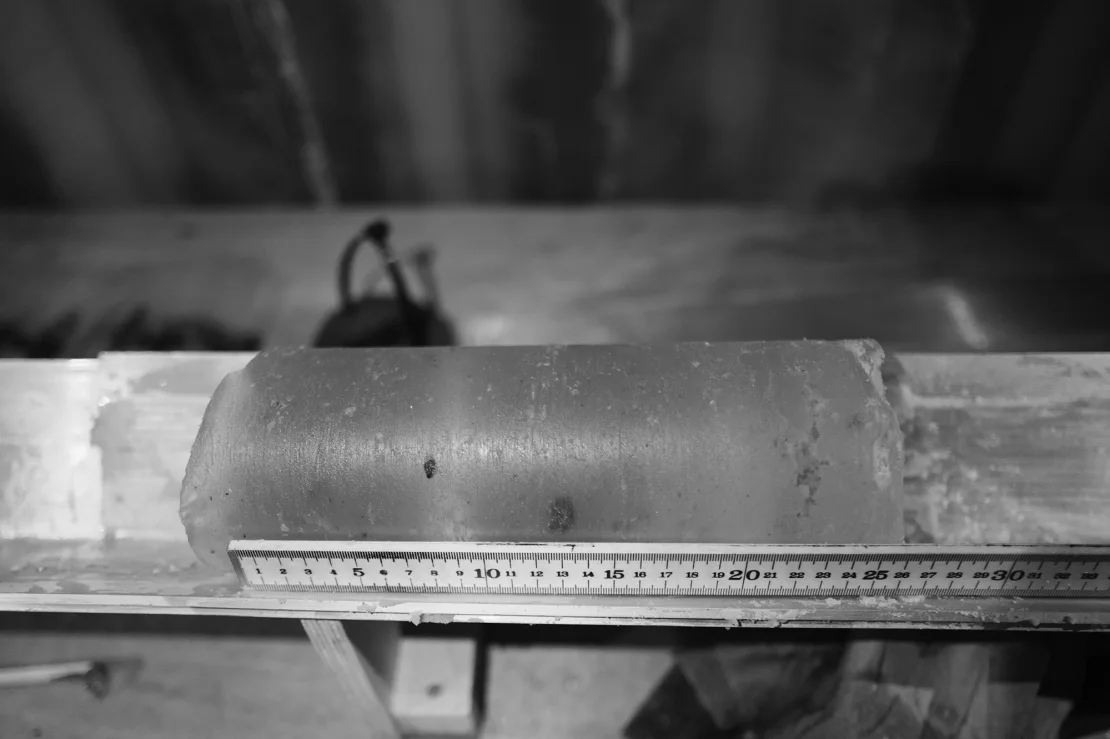
The particles and air bubbles found in the deepest layers of the ice core may provide insights into Earth's climate 1.2 million years ago. CNN
The slices of the core will soon be shipped to research institutions across Europe for extensive study. Scientists are also planning to search for even older ice, hoping to uncover deeper insights into Earth's climate history, though this will require advanced technology and careful planning.