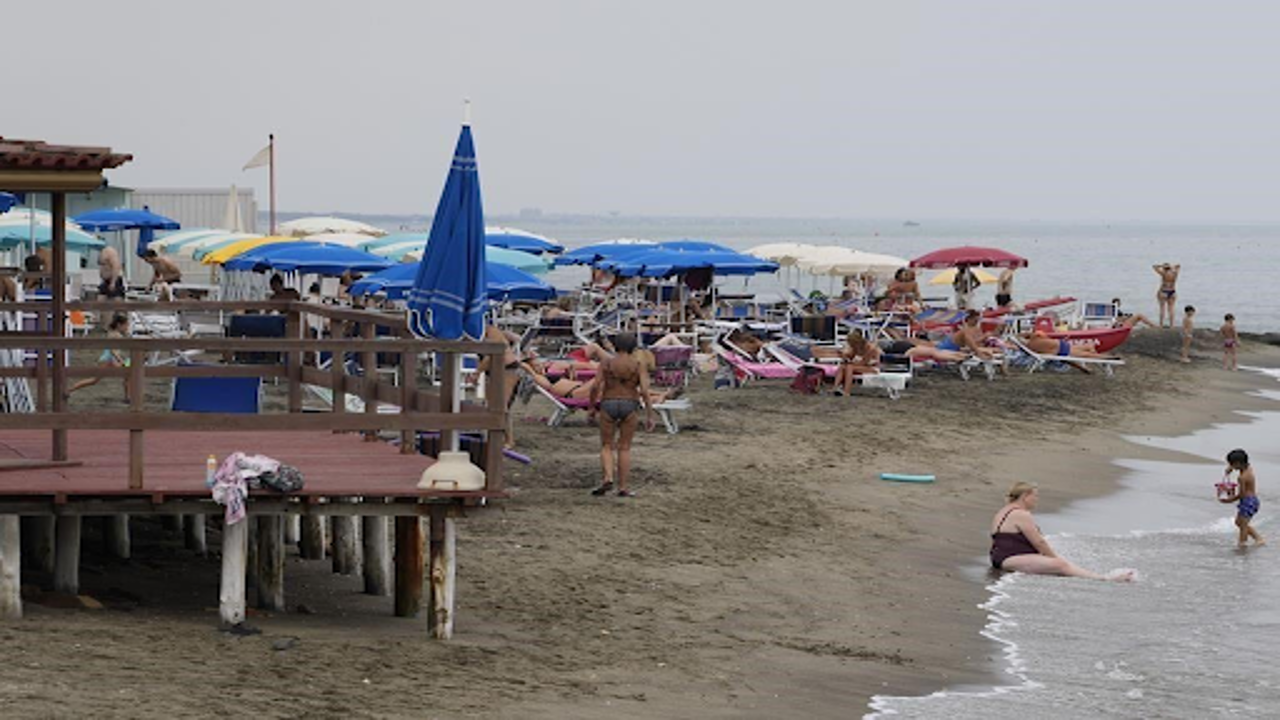
Beachgoers bask at a beach establishment in Ostia, near Rome, Friday, Aug. 16, 2024. (AP Photo)
Italy’s beaches have become the center of a heated debate this summer, as the European Commission continues its long-standing conflict with Italy over beach concessions. For nearly twenty years, the EU has accused Italy of failing to follow transparency and competition rules in managing these lucrative concessions.
Italian governments, regardless of their political affiliations, have resisted EU demands for competitive bidding. Instead, they have repeatedly renewed existing concessions without open procedures. Recently, the far-right government of Giorgia Meloni extended the concessions until the end of the year, leaving Rome with little choice but to comply with EU regulations starting in early 2025.
The uncertainty surrounding these concessions has left many beach operators worried about their future. Susanna Barbadoro, representing a family-run beach concession in Ostia, near Rome, voiced concerns about protecting their rights. For decades, beach concessions have been handed down through generations, leading critics to view them as monopolies and symbols of Italy’s reluctance to embrace economic reforms.
The cost of enjoying Italy’s beaches varies widely. Basic setups, including two lounge chairs and an umbrella, can cost around 25 euros per day, while luxurious resorts in places like Capri or Salento can charge several hundred euros. Beach operators argue that their significant investments in improving facilities should be compensated.
On August 9, numerous beach operators participated in a strike, briefly closing their establishments to draw attention to their plight. Barbadoro, among others, called for a system where long-time operators could either retain some priority in new tenders or receive compensation if they lost their concessions.
Economists, however, argue that beach concession holders have long taken advantage of their advantageous positions, contributing minimally to state revenue. Data from the Italian Court of Auditors reveals that, from 2016 to 2020, the Italian government collected approximately 97 million euros annually from beach concessions. With an average revenue of 260,000 euros per concession, operators have been paying only around 7,600 euros each year.
Pietro Paganini, an economist, noted that competition could benefit everyone, particularly since these concessions are on public land. He criticized Italian governments for protecting concession holders, who represent a valuable voting bloc.
Last year, the Meloni government tried to justify its non-compliance with the EU’s Bolkestein directive by submitting a report to Brussels. The report claimed that only 33% of Italy’s coastline is under concession, arguing that there is no need for competitive bidding. However, EU officials pointed out that this data includes non-swimmable areas and rocky shores, which are not eligible for concession.
Members of “Mare Libero,” an advocacy group fighting for more free beach space, hope that new rules will ensure a fair distribution. Roberto del Bove, a coordinator for Mare Libero, expressed a desire for the state to guarantee at least 50% of beaches remain free, with the remaining 50% allocated through concessions.