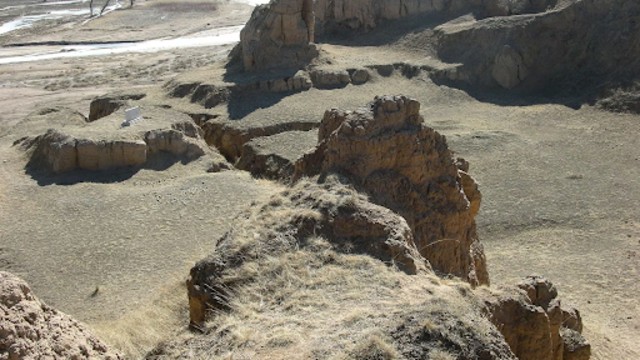
In the 1970s, scientists discovered 21 hominin fossils at the Xujiayao site in northern China. These fossils are now thought to belong to an entirely new species of human, previously unknown to science. CNN
The story of human evolution has always been complex, but recent discoveries are making it even more fascinating. Each year, scientists unearth new clues that shed light on our origins, revealing unexpected twists and new branches in the human family tree.
Over the last two decades, groundbreaking discoveries have added new species to our evolutionary history. Among them are the hobbit-like Homo floresiensis and the robust Homo naledi, both of which have given researchers more insight into how diverse ancient humans were. The discovery of a pinkie bone in Siberia’s Denisova Cave in 2010 pointed to an entirely new group of ancient humans called Denisovans, adding another layer to the puzzle of our shared ancestry.
Now, researchers are focused on a collection of mysterious fossils discovered in China that could point to yet another unknown branch in the family tree. These fossils, which include skull fragments, teeth, and jaws, suggest the existence of an ancient human relative. These remains could belong to a species with a brain even larger than modern humans. This new species, which researchers have tentatively named Homo juluensis, could be a missing link in our understanding of human evolution.
The concept of Homo juluensis is causing a bit of controversy among experts, especially as there is still a lot to learn about the fossils. Christopher Bae, a professor at the University of Hawaii, and Wu Xiujie, a senior professor at Beijing’s Institute of Vertebrate Paleontology and Paleoanthropology, believe these fossils could also be connected to the Denisovans. However, no skull from the Denisovans has yet been found in the same region, making it difficult to prove this theory definitively.
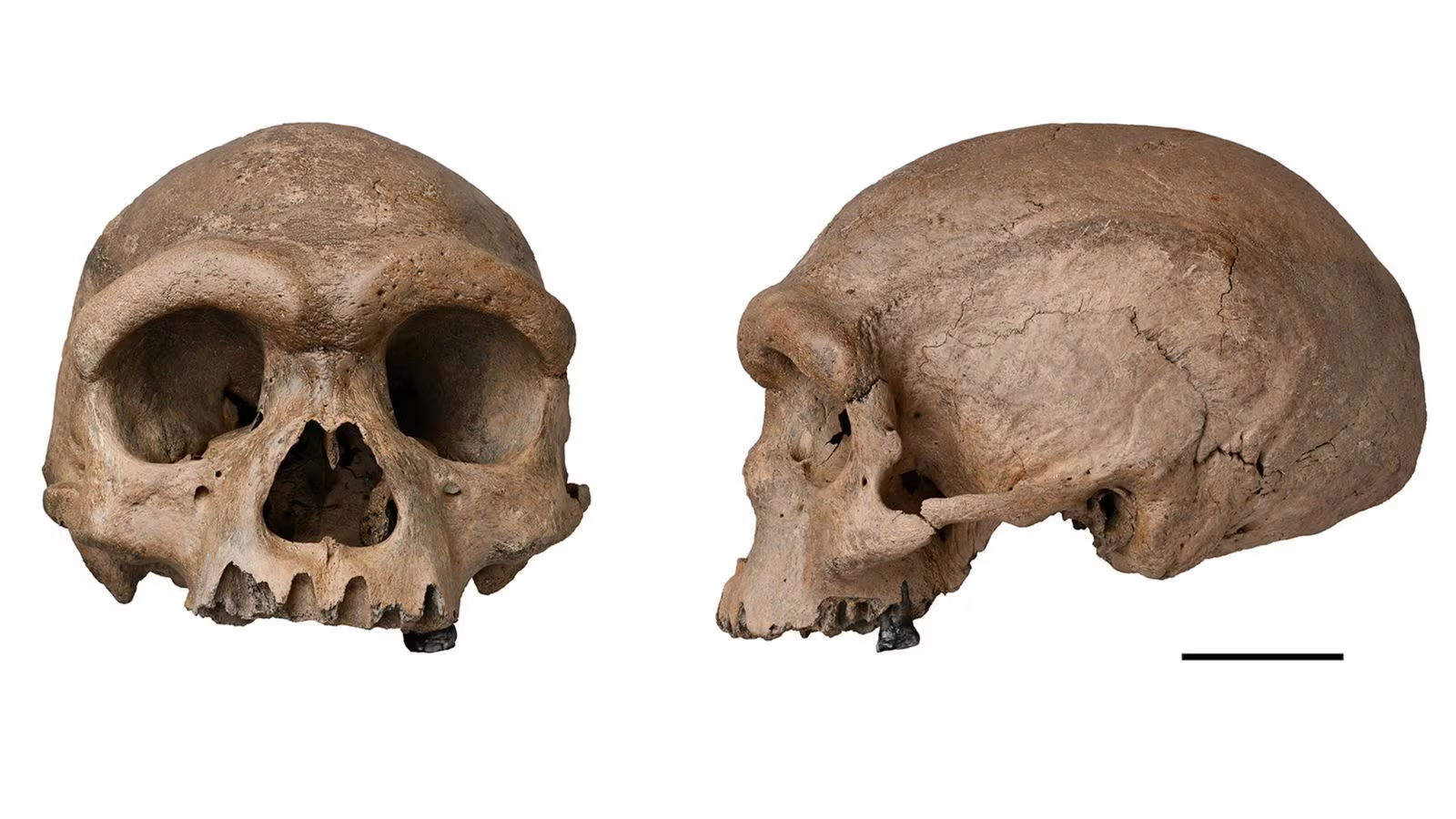
A skull that had been hidden at the bottom of a well for nearly 90 years in Harbin, Heilongjiang province, China, was recently discovered. Experts have since examined it to learn more about human origins. CNN
Meanwhile, in the world of space science, astronomers have been trying to solve the mystery of fast radio bursts (FRBs) ever since their discovery in 2007. These bursts release more energy in a few milliseconds than our sun does in an entire day. Recently, the Canadian Hydrogen Intensity Mapping Experiment radio telescope helped scientists trace two such bursts. One was linked to a magnetar, a highly magnetic and rapidly rotating star, while the other came from the outer edges of a distant galaxy. These findings suggest that FRBs might have multiple origins, giving astronomers new paths to explore in their quest to understand these energetic flashes.
Back on Earth, conservation efforts are underway to save the brush-tailed bettong, a small marsupial that has been compared to a miniature kangaroo. This creature, native to Australia, has a unique defense mechanism. When threatened by predators, it ejects its joey from its pouch and hops away to safety. Sadly, this species’ population has plummeted by 90%, but thanks to recent conservation work, the bettong is being reintroduced to its native environment. As it digs for underground fungi, it plays an important role in the ecosystem by helping plants grow and aerating the soil.
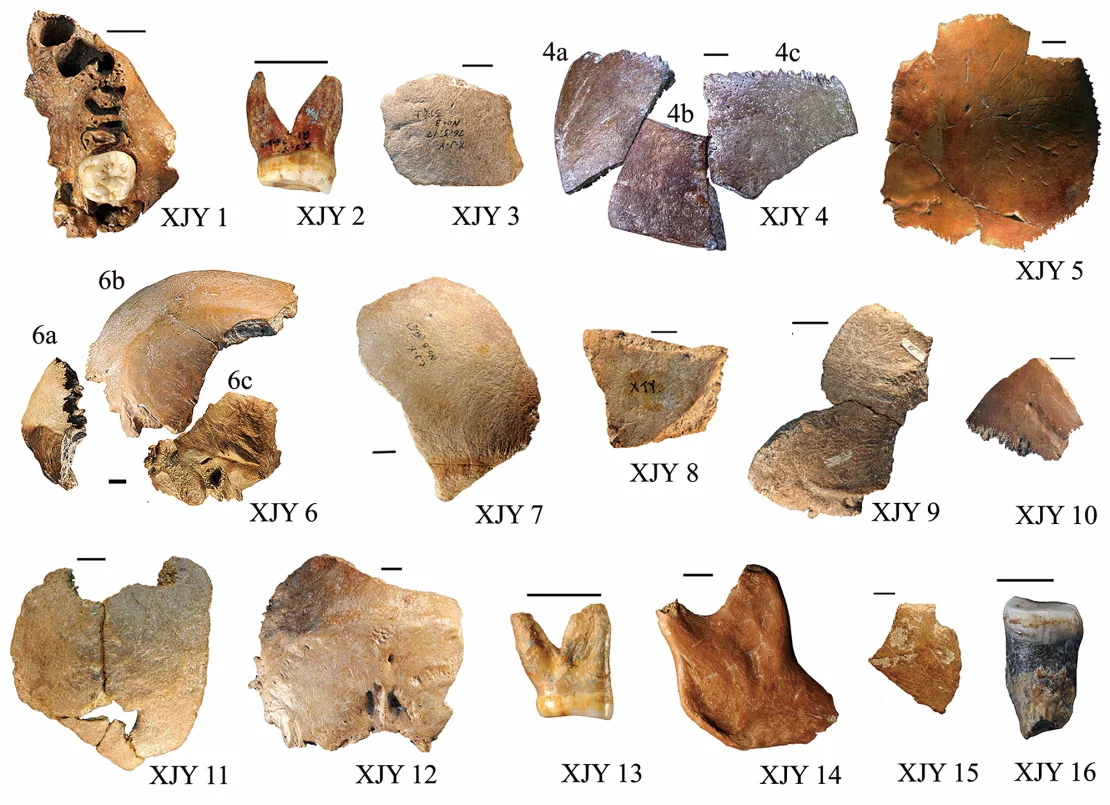
Sixteen fossilized bone fragments were uncovered at Xujiayao, located in northern China. CNN
In Canada, an extraordinary event occurred when a meteorite fell onto a home’s front walkway in Charlottetown, Prince Edward Island. Captured on a Ring doorbell camera, this meteorite strike is the first of its kind to be documented so closely, including the sound of the impact. After millions of years traveling through the solar system, the rock has found its place in the University of Alberta’s Meteorite Collection.
Far beyond Earth, Mars continues to intrigue scientists. Thousands of mysterious mounds scattered across the Martian lowlands might hold the key to understanding the planet’s past. These formations, resembling the iconic buttes of Monument Valley, could have been shaped by ancient water flows billions of years ago. Researchers are now investigating these mounds to learn more about the history of water on Mars.