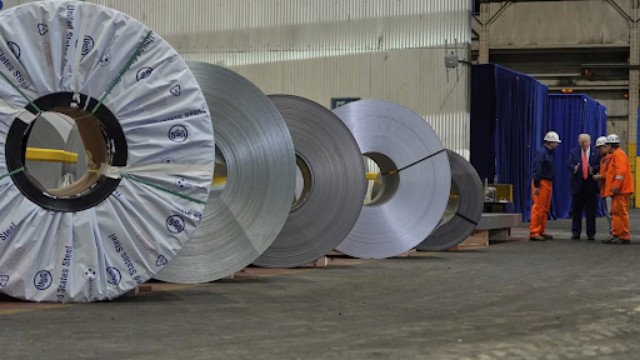
U.S. President Donald Trump spoke with employees during his visit to the U.S. Steel plant at Mon Valley Works-Irvin in West Mifflin, Pennsylvania, on Friday, May 30, 2025. (AP Photo/Julia Demaree Nikhinson, File)
After months of political back-and-forth and national security scrutiny, Japan’s Nippon Steel has officially acquired U.S. Steel for nearly $15 billion. This deal, which started over a year ago, marks a significant moment in global industry and diplomacy.
The acquisition faced delays due to growing concerns in Washington over national security and the importance of keeping American steel production strong. These concerns led to a major revision in the terms of the agreement. The final deal now includes several protective measures that give the U.S. government a direct say in critical business decisions. One major addition is the “golden share” clause, allowing the government to appoint an independent board member and hold veto power on matters involving domestic production, plant closures, or foreign competition.
Nippon Steel, already a major global player, has now become the world’s fourth-largest steelmaker. The partnership is expected to breathe new life into U.S. Steel, known for its outdated facilities. Nippon has promised to invest $11 billion through 2028 to modernize U.S. Steel’s aging plants and commit to using U.S.-sourced materials, such as iron ore from Minnesota.
In return, Nippon gains firm access to a growing and protected U.S. market, boosted by steel tariffs introduced under both Trump and Biden. Experts note that this deal reflects a shifting trend in how the U.S. views its economy—national security is now closely tied to industrial strength.
Anthony Rapa, a trade lawyer based in Washington, said the U.S. is increasingly linking economic stability with national defence. While the government’s deeper involvement might make foreign investors more cautious, Rapa believes the “golden share” method will only be used in select, high-stakes deals.
Anil Khurana from Georgetown University added that the U.S.’s growing rivalry with China played a role in how this deal unfolded. Protecting steel production is now considered crucial to maintaining competitiveness on the global stage.
Despite the layers of approval, not everyone welcomed the acquisition. The United Steelworkers union opposed the deal, worried about job security and long-term benefits. President Biden initially blocked the takeover, but after Trump returned to office, a second review was ordered. That process led to further concessions from Nippon, including retaining U.S. Steel’s name and headquarters in Pittsburgh, and avoiding layoffs or plant closures.
The agreement also states that U.S. Steel will be governed by a majority-American board and led by American executives. The company also retains the right to file trade actions under U.S. law. Nippon Steel has pledged not to import steel slabs that would compete with blast furnaces in key U.S. locations like Braddock and Gary.
With this deal, Nippon Steel inches closer to its goal of producing 100 million tons of steel annually. However, the United Steelworkers union remains cautious, saying their current labour agreement ends in 2026. Union leader David McCall has warned they are ready to act if jobs or benefits are threatened.