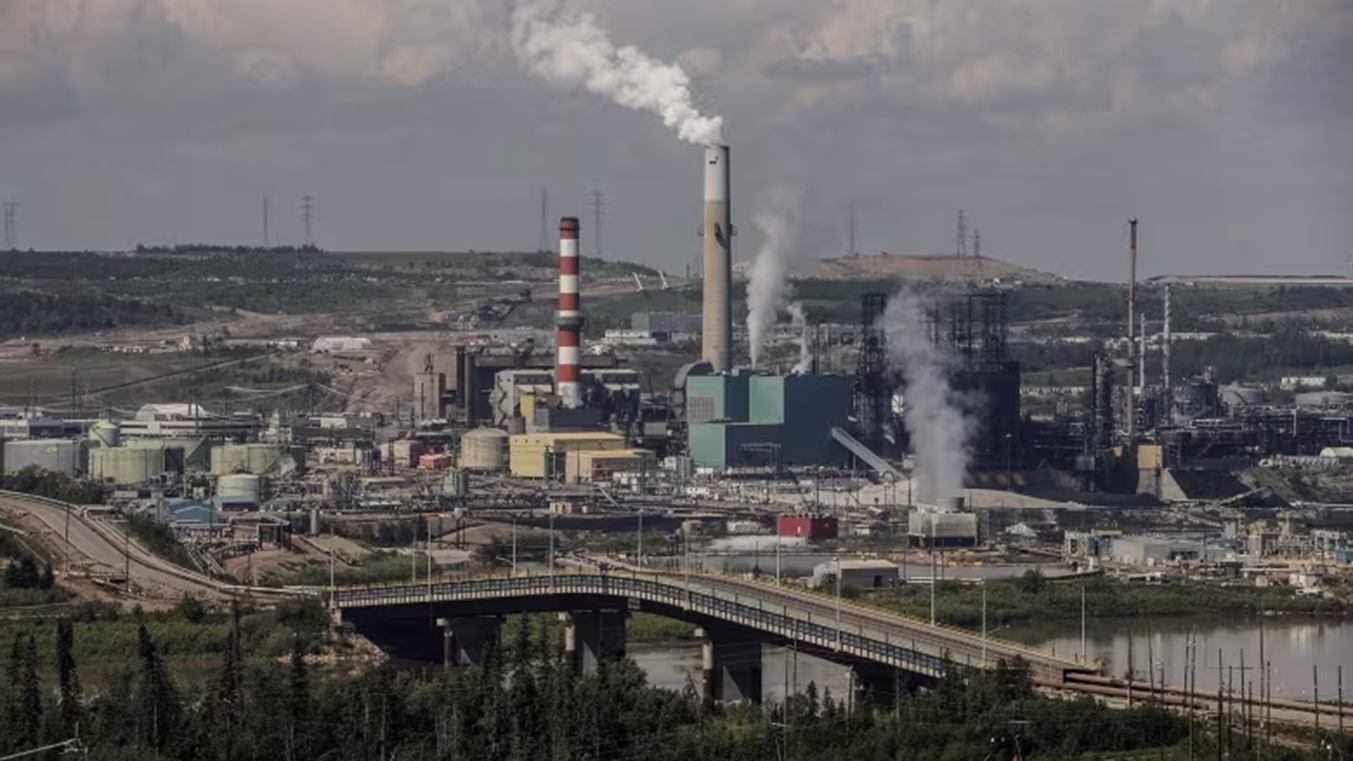
The proposed emissions control plan by the Liberal government aims to limit greenhouse gas emissions from the oil and gas industry. Under this framework, the target is to cap emissions between 35 to 38 percent below the levels recorded in 2019 by the year 2030. The overall objective is to achieve net-zero emissions from the sector by 2050. Notably, Suncor's oilsands plant in Fort McMurray, Alberta, will be subject to these emission reduction measures as outlined in the plan.
The federal government unveiled its plan to regulate emissions in the oil and gas sector, introducing a national cap-and-trade system designed to curb emissions without impeding production. On Thursday, Environment Minister Steve Guilbeault addressed the pressing issue, highlighting that the oil and gas industry, responsible for 28% of Canada's emissions, is still on an upward pollution trajectory.
Guilbeault stressed the need to address emissions for the benefit of Canadians and the global community while ensuring the preservation of Canada's reputation for energy innovation. The proposed framework aims to cap emissions in 2030 at 35 to 38 percent below 2019 levels, aligning with the government's objective to achieve net-zero carbon emissions in the sector by 2050.
Born out of concerns for rising emissions, the government is sharing the framework ahead of draft regulations, slated for mid-2024, to allow industry stakeholders time to contribute their perspectives. The scope of the framework covers various sub-sectors within oil and gas, such as liquefied natural gas, conventional and offshore oil, oil sands, and natural gas processing.
Facilities within these sub-sectors will be allocated carbon allowances based on their emissions, with a gradual reduction over time. Compliance involves either emission reduction or purchasing allowances from facilities that have successfully decreased their emissions. However, refineries are excluded from the cap, falling under clean fuel regulations.
While the government asserts that the cap-and-trade system will lead to a 20 to 23 percent reduction in emissions by 2030, industry expansion could still see a 12 percent increase from 2019 levels. To bridge the gap and reach the 35 to 38 percent target, the sector may leverage offset credits or contribute to a decarbonization fund for future emissions reductions.
The Canadian Association of Petroleum Producers (CAPP) expressed concerns, citing the framework's potential complexity and its potential to hinder investments in clean energy projects. CAPP warned of unintended consequences that could lead to significant production curtailments and higher energy prices for Canadians.
The proposed emission reduction targets are less ambitious than initially planned, reportedly adjusted to avoid legal conflicts with provinces following recent court decisions impacting federal climate policies. Notably, the framework aligns with other policies, including methane regulations and carbon pricing, acknowledging the interconnection of emissions reduction efforts.
While some environmentalists appreciate the framework's responsible approach, criticism focuses on the delayed timeline for implementation, set for 2026. Critics argue that there is no need for such a postponement, emphasizing the urgency of addressing emissions promptly.
As the framework ignites debates between the federal government and provinces, notably Alberta and Saskatchewan, the complex interplay between environmental responsibility, economic impacts, and constitutional rights remains a central point of contention. The future of Canada's oil and gas industry is at a crossroads, with stakeholders urging a careful balance between environmental goals and economic considerations.