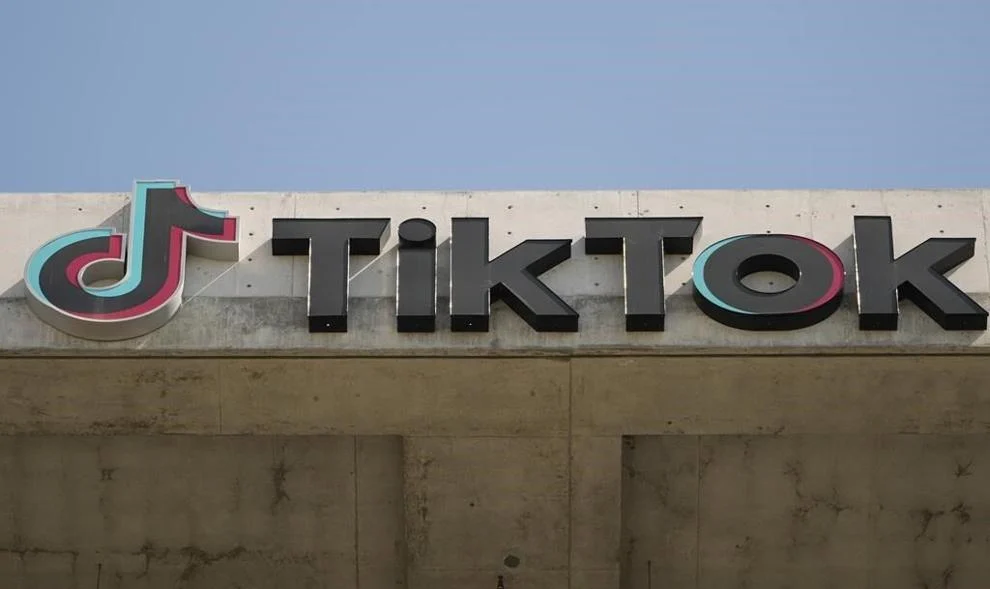
A TikTok sign is displayed on their building in Culver City, Calif., March 11, 2024. If it feels like TikTok has been around forever, that's probably because it has, at least if you're measuring via internet time. What's now in question is whether it will be around much longer — and if so, in what form.. Source : The Canadian Press
Over its relatively brief existence in the digital realm, TikTok, the wildly popular social video app, has carved out a significant space in the collective consciousness. From its humble beginnings in 2017, when it merged with Musical.ly, another Chinese social media platform, TikTok has transformed into a global sensation, capturing the attention of millions worldwide. Yet, amidst its meteoric rise, concerns have been raised regarding its implications for national security, particularly by U.S. officials.
The latest development in this ongoing saga occurred on Wednesday, with President Joe Biden signing legislation mandating TikTok's parent company, ByteDance, to either sell the platform to a U.S. entity within a year or face closure. However, the fate of this decree remains uncertain, as it is expected to face legal challenges, and ByteDance's willingness to comply with the directive remains ambiguous.
The evolution of TikTok into a phenomenon can be traced back to its inception. Founded in 2012 by entrepreneur Zhang Yimin in China, ByteDance initially gained traction with Toutiao, a personalized news aggregator. Meanwhile, in 2014, Alex Zhu launched Musical.ly, a platform for users to create and share short music videos. The convergence of these two entities in 2017 marked the birth of TikTok as we know it today.
With its innovative algorithm encouraging binge-worthy content consumption, TikTok swiftly gained popularity, with users flocking to share a diverse array of videos, from dance routines to cooking tutorials. Its influence even extended to the music industry, evidenced by the viral success of songs like "Old Town Road" by Lil Nas X.
However, alongside its rapid ascent came mounting concerns regarding its content moderation practices. Reports surfaced of TikTok's selective censorship, particularly regarding politically sensitive topics like the Hong Kong protests and issues related to China's government. These revelations sparked scrutiny from U.S. lawmakers, prompting investigations into the app's ties to China and its potential security risks.
The situation escalated in 2020 when India banned TikTok and other Chinese apps following a border dispute with China. Subsequently, former President Donald Trump issued executive orders seeking to ban TikTok in the U.S. or compel its sale to an American company, citing national security concerns. Despite these efforts, a sale never materialized, and Trump's plans faced setbacks following his departure from office.
The debate surrounding TikTok's security implications persisted into President Biden's administration, culminating in the recent legislative action to address the platform's ownership. Meanwhile, TikTok has attempted to assuage concerns by implementing stricter content guidelines and relocating user data to U.S. servers. However, doubts linger regarding the potential for Chinese government interference and data privacy issues.
As the saga continues to unfold, TikTok finds itself at a crossroads, grappling with the complexities of geopolitics and digital governance. With legislative proposals looming and public scrutiny intensifying, the future of TikTok hangs in the balance, its fate intertwined with broader debates surrounding technology, security, and sovereignty.