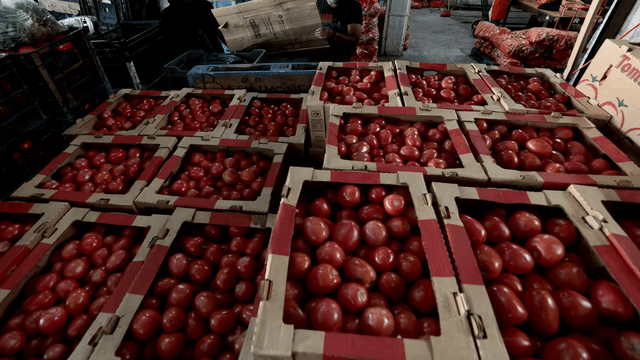
Boxes of tomatoes at the Central de Abastos market in Guadalajara, Mexico on January 31. Prices for tomatoes could go up soon because of tariffs on Mexican imports.
American consumers could soon pay more for tomatoes — not because of shortages, but due to new tariffs. Starting July 14, a longstanding trade agreement between the US and Mexico may collapse, triggering a steep 20.9% tariff on most Mexican tomato imports. For many small businesses, that’s more than just a price hike — it could mean shutting down.
Southern California restaurant owner Teresa Razo fears the worst. “I give it three months, and then we go bankrupt,” she says. Her two Argentine-Italian restaurants rely heavily on tomatoes for sauces, salads, and pizzas. If prices spike, she may be forced to raise menu prices or close her doors.
The End of a 28-Year Agreement
The Tomato Suspension Agreement, signed in 1996, was designed to prevent "dumping" — the practice of selling produce at unfairly low prices in foreign markets. It set a price floor for Mexican tomato imports to protect US growers.
However, the US Commerce Department announced its withdrawal from the agreement in April. Officials argue it has failed to protect domestic farmers from unfair competition, opening the door to steep new tariffs.
If implemented, these tariffs will likely cause immediate price jumps for tomatoes at grocery stores and restaurants alike.
Tomato Tariffs and the Price Impact
According to the Bureau of Labor Statistics, field-grown tomatoes cost American shoppers around $1.70 per pound in May 2025. With the proposed tariff, experts expect consumer prices to rise by about 10%, and demand could drop by 5%.
Timothy Richards, an agribusiness professor at Arizona State University, believes even such moderate increases can deeply affect small restaurants and food businesses.
The US is the biggest market for Mexican tomatoes, making this policy shift especially impactful. In turn, American consumers could see higher prices not only at the supermarket but also in restaurants, fast food chains, and pizzerias.
A Divided Industry
Some US tomato growers are welcoming the tariffs. They believe Mexican exporters have long undercut domestic prices, harming American farmers.
“For more than three decades, five agreements have failed to stop illegal dumping,” said Robert Guenther of the Florida Tomato Exchange. He blames the existing trade framework for weakening the American tomato industry.
But that view isn’t shared across the border.
Walberto Solorio, president of the Baja California Agricultural Council, says most Mexican producers have played by the rules. “This is more political than commercial,” he argues. “We've complied with audits, quality checks, and minimum prices.”
Small Restaurants Caught in the Middle
While large brands like Heinz and DiGiorno rely solely on US-grown tomatoes, smaller eateries don’t always have that luxury.
Justin De Leon, owner of Appollonia’s Pizzeria in Los Angeles, uses California tomatoes for sauce but relies on Mexican produce for fresh toppings. He changes sources based on the season, always seeking the best quality.
Razo, on the other hand, is scrambling to find reliable US suppliers. If she can’t, she’ll have to raise prices — a move that may alienate customers. “If people used to eat out three times a week, they’ll drop to once,” she warns.
She’s stopped tracking the tariff news daily — the uncertainty is affecting her mental health. “We already have enough instability,” she says. “We don’t need more.”
Looking Ahead
Guenther insists US farmers can meet demand year-round, thanks to new farming technologies and regional diversity. Mexican growers could still export to the US — just under stricter trade terms.
But Solorio pushes back. He argues that Mexican tomatoes undergo quarterly audits and regular border checks, ensuring they meet quality and pricing standards.
For now, small business owners like Razo and De Leon are bracing for the impact. With cheese tariffs already eating into margins, tomato tariffs could be the breaking point.
“I just hope it ends soon,” says De Leon. “We’re all stretched thin.”