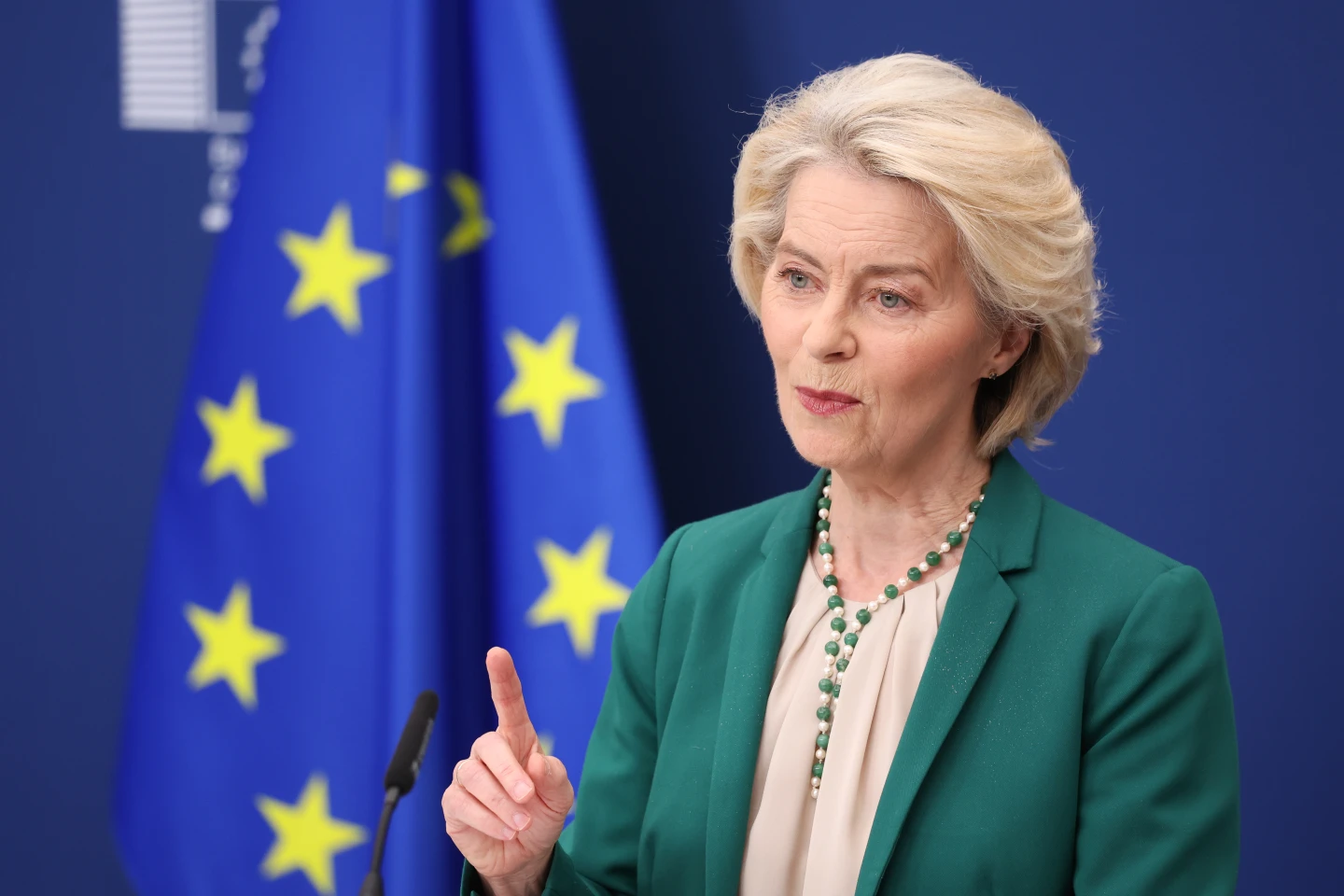
European Commission President Ursula von der Leyen speaks during a media conference at EU headquarters in Brussels, Wednesday, April 15, 2026.
The long-awaited EU-Mercosur trade deal has officially taken provisional effect, marking a significant milestone after more than two decades of negotiations. The agreement connects the European Union with the South American Mercosur bloc, creating one of the world’s largest trade partnerships and setting the stage for expanded economic cooperation.
EU-Mercosur Trade Deal Creates Massive Economic Opportunity
The EU-Mercosur trade deal links a combined market valued at around $22 trillion, offering access to roughly 720 million consumers. Supporters believe the agreement will unlock new export opportunities across both regions, with some countries projecting growth exceeding 10% over the next decade.
European Commission President Ursula von der Leyen described the deal as a boost for businesses, consumers, and farmers alike. She emphasized that the agreement includes safeguards to protect sensitive industries while still enabling broader market access.
The provisional rollout allows trade benefits to begin while legal and political processes continue, reflecting the urgency to strengthen economic ties in a shifting global landscape.
Political Pushback Challenges EU-Mercosur Trade Deal Implementation
Despite its economic promise, the EU-Mercosur trade deal has already sparked political resistance within Europe. Lawmakers have challenged the decision to implement the agreement without full parliamentary approval, taking the matter to the bloc’s judiciary.
If the court rules against the move, the agreement could be halted, adding uncertainty to its long-term future. This legal challenge highlights ongoing tensions between economic ambitions and democratic oversight within the European Union.
Meanwhile, Emmanuel Macron has remained a vocal critic, calling for stricter safeguards to protect European farmers and ensure environmental standards are upheld. His concerns reflect broader apprehension among agricultural groups worried about increased competition.
South America Sees Strategic Gains in Global Trade Landscape
In South America, leaders have largely welcomed the EU-Mercosur trade deal as a strategic response to changing global trade dynamics. Luiz Inácio Lula da Silva framed the agreement as a reaffirmation of multilateral cooperation, especially in the face of rising unilateral trade measures worldwide.
Brazil, the largest economy within Mercosur, is expected to play a central role in driving the deal’s benefits. Officials believe the agreement will strengthen export sectors such as agriculture and natural resources, while also attracting investment from European industries.
Analysts view the deal as a signal that large economic blocs can still collaborate effectively, even as global trade systems face increasing strain.
Industry Expectations Mixed Across Regions
The EU-Mercosur trade deal has generated both optimism and caution among industries on both sides. South American exporters, particularly in beef, fruit, and minerals, anticipate expanded access to European markets, potentially boosting revenues and economic growth.
At the same time, European companies in sectors like automotive, pharmaceuticals, and technology are preparing to expand their presence in South America, leveraging reduced tariffs and fewer trade barriers.
However, concerns remain about uneven competition. Businesses in Mercosur countries worry about competing with advanced European industries, while European farmers fear lower-cost imports could disrupt local markets.
To address these issues, the agreement includes safeguard mechanisms designed to protect vulnerable sectors and prevent sudden economic shocks.
EU-Mercosur Trade Deal Signals Shift Toward Multilateralism
As the EU-Mercosur trade deal moves forward, it reflects a broader effort to revive multilateral trade cooperation in an increasingly fragmented global environment. Supporters argue that such agreements are essential for maintaining stability and fostering economic growth across regions.
At the same time, ongoing debates over environmental standards, regulatory alignment, and fair competition suggest that the path ahead will require careful negotiation and monitoring.
While the deal’s long-term impact remains uncertain, its provisional launch marks a significant step toward deeper economic integration between Europe and South America.