UK economy faces slow growth, inflation pressures amid global volatility. Photo Credit: Getty Images
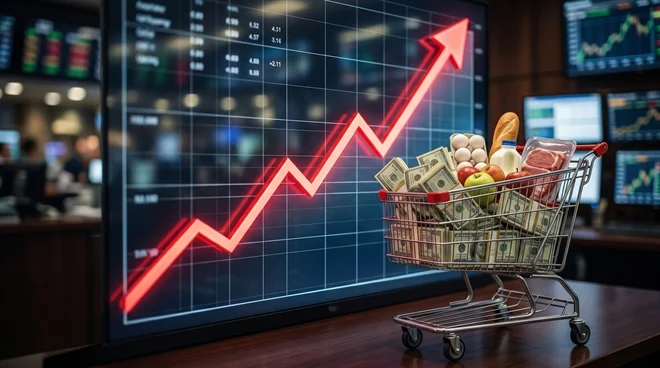
Northern Ireland’s economy is forecast to grow by just 0.7% in 2026, as businesses and consumers continue to face the impact of higher energy prices. The outlook, which aligns with forecasts from Ulster University and other analysts, reflects growing challenges tied to global economic uncertainty and rising costs.
Energy Prices and Global Volatility Impact Economy
The economic growth forecast is tempered by global volatility, particularly the impact of the ongoing US-Israeli war on Iran. According to consultancy firm EY, Northern Ireland's economy has been significantly affected by rising energy costs, with heating oil prices soaring by a record 92% in March. Nearly two-thirds of households in Northern Ireland rely on heating oil, further stressing household budgets.
Resilient but Constrained Economy
Despite these challenges, EY noted that business surveys from the beginning of the year indicated expanding private sector activity in Northern Ireland. Rob Heron, managing partner at EY Northern Ireland, highlighted that while the economy shows resilience, growth is being increasingly constrained by global economic factors, which impact costs, consumer confidence, and investment decisions.
Republic of Ireland’s Economy Projected to Grow by 2.7%
While Northern Ireland’s economic outlook is subdued, the Republic of Ireland is forecast to experience moderate growth of 2.7% this year. This is a slight dip from the exceptional growth of nearly 5% seen in 2025. EY’s chief economist, Dr. Loretta O’Sullivan, pointed out that while Ireland had a strong performance last year, the global economic landscape, including the ongoing conflict in the Middle East, has created uncertainties that will lead to more modest growth in 2026.
Challenges Amid Global Uncertainty
Both Northern Ireland and the Republic of Ireland are facing economic uncertainty driven by global factors. The ongoing geopolitical tensions, energy market volatility, and the unpredictable nature of the global economy are major influences. EY warns that the current economic models may need to be reassessed if global conditions change unexpectedly.