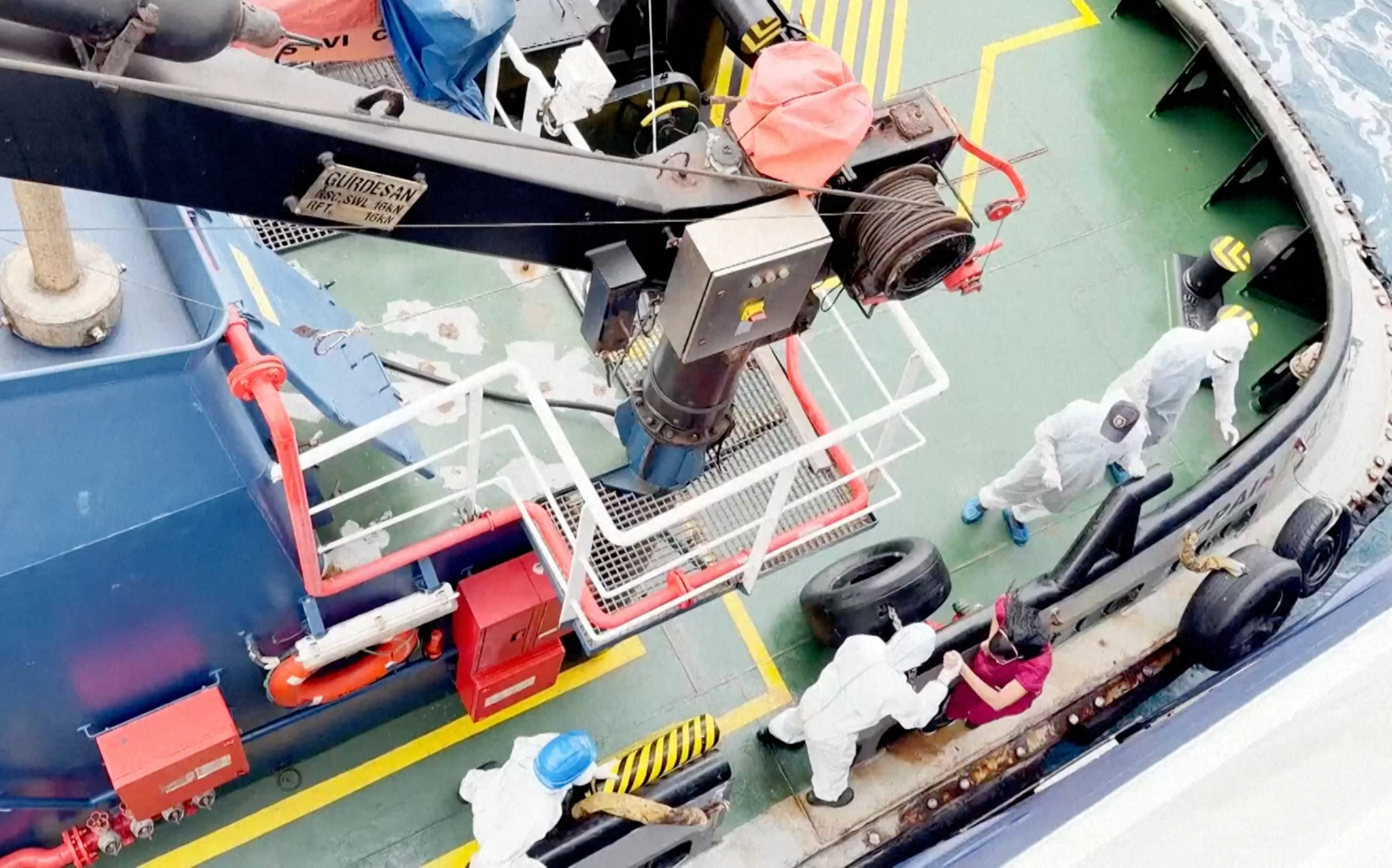
Health workers get off the Dutch-flagged MV Hondius, a cruise ship carrying nearly 150 people as it remains off Cape Verde on Monday, May 4, 2026 after three passengers died and several others fell seriously ill in a suspected hantavirus outbreak. (AP Photo)
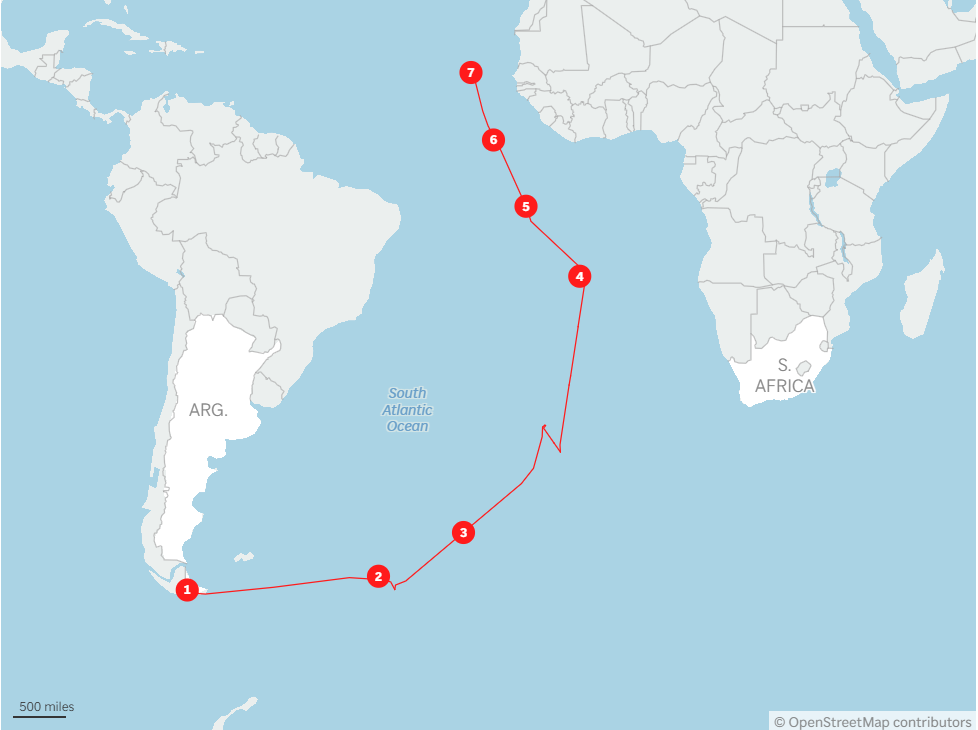
A deadly hantavirus outbreak has unfolded aboard the MV Hondius, a Dutch expedition cruise ship. Over several weeks, the rare virus spread through passengers and crew as the ship sailed from Argentina to Antarctica and across the South Atlantic, leaving three dead and dozens infected.
Initial Symptoms and Deaths
The outbreak began on April 6 when a 70-year-old Dutch man developed fever, headache, and diarrhea, ultimately dying on April 11 in the South Atlantic. At the time of his death, the cause was undetermined. The ship continued its journey for nearly two more weeks before the man’s body was taken off in St. Helena on April 24.
Secondary Fatalities and Ongoing Infections
After the death of the Dutch passenger, his wife fell ill and collapsed during a flight to South Africa, where she died on April 26. Another passenger, a British man, also became seriously ill and was evacuated to South Africa on April 27. A third fatality occurred when a 63-year-old German woman died onboard the ship on April 29 after exhibiting pneumonia symptoms, a common sign of hantavirus infection.
Discovery of the Outbreak
It wasn’t until 21 days after the first death that South African health authorities confirmed hantavirus through a positive test result from the British man. Following this, posthumous tests on the Dutch woman’s body also returned positive for hantavirus. The World Health Organization (WHO) announced the outbreak on May 1 and stated that the global risk remains low, as the virus doesn’t typically spread between people.
Efforts to Contain the Outbreak
The ship is currently in Cape Verde, with urgent medical evacuations underway. WHO has implemented stringent isolation measures to curb further spread, including the quarantine of passengers and crew in their cabins with physical distancing. Plans are being made to move those needing urgent care to the Netherlands, with the ship sailing to the Canary Islands next.
Investigating the Source
The WHO is still investigating how the virus, which is typically found in rodents, entered the ship. The Dutch passengers had previously traveled through Argentina and Chile, areas where the Andes strain of hantavirus is common. The ship is now under scrutiny for its possible exposure to this rare infection.