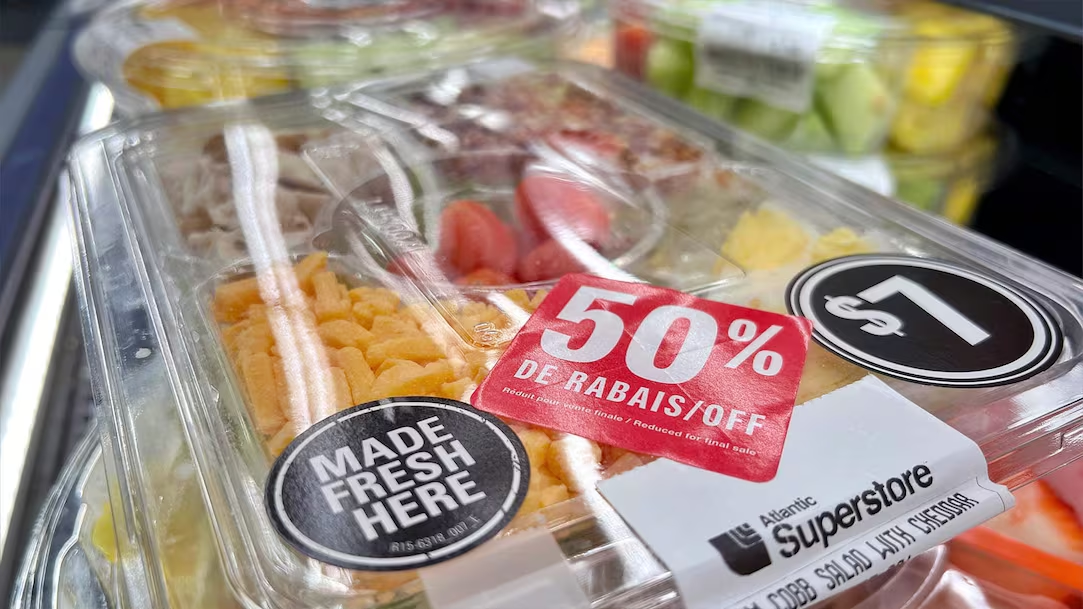
As per the survey, looking for sales and discounts continues to be the most common way Canadians manage rising food expenses. (CBC)
Canadians are continuing to feel the impact of rising grocery prices, but many are finding new ways to manage their spending, according to a recent national survey.
Everyday Shoppers Feel the Pressure
For Claire Acorn of Prince Edward Island, grocery shopping has remained largely the same over the years. She shops every few weeks and sticks to familiar items. Still, she says rising prices are becoming harder to ignore.
“Oh, it hurts, yes. But what do you do?” she said. “I have to go along with the prices.”
Her daughter, Charlotte Acorn, has taken a more active approach. She grows vegetables such as carrots, beans, and cucumbers during the summer and preserves them for winter use. She also looks for deals and compares prices online before making purchases.
Survey Highlights National Trends
Their experience reflects a broader trend across the country. Researchers at Dalhousie University’s Agri-Food Analytics Lab surveyed 3,000 Canadians as part of the Canadian Food Sentiment Index.
The survey found that food is the household expense that has increased the most over the past year. On average, households spend about $600 per month on groceries, though larger families may spend much more.
“A family of four with growing kids will probably have to spend about $17,000 this year,” said Sylvain Charlebois, director of the lab.
About one-third of respondents said they had to use savings or borrow money to cover food costs in the past year.
Changing Views on Food Inflation
While food prices remain high, many Canadians are beginning to accept them as the new normal. Fewer people now believe prices are rising sharply.
In late 2024, more than 40 per cent of Canadians thought food prices had increased by over 10 per cent. By spring 2026, that number dropped to about 30 per cent.
More people now expect moderate increases between five and seven per cent, suggesting growing confidence that price hikes may be slowing.
Food Inflation Still Outpaces Overall Inflation
Despite this shift in perception, food inflation remains higher than overall inflation. In March, general inflation was about 2.4 per cent, while grocery prices rose by 4.4 per cent.
Charlebois noted that Canada’s food inflation rate is currently the highest among G7 countries. He also warned that rising global fuel costs, linked to tensions involving Israel, the United States, and Iran, could push prices even higher.
Smarter Shopping Becomes Common
Canadians are adjusting by becoming more strategic shoppers. About 44 per cent now rely on sales and discounts to save money.
Other strategies include using coupons, shopping at cheaper stores, and choosing lower-cost alternatives. Many shoppers are buying canned proteins like lentils, tuna, and sardines instead of fresh meat.
Some are switching to store brands, cutting back on non-essential items, or using apps that offer discounted or surplus food.
“Now, people are a little bit more strategic,” Charlebois said.
Shifting Consumer Behaviour
More Canadians are also willing to walk away from high prices, sending a message to retailers. This shift is encouraging change in the market, with more independent stores offering affordable options.