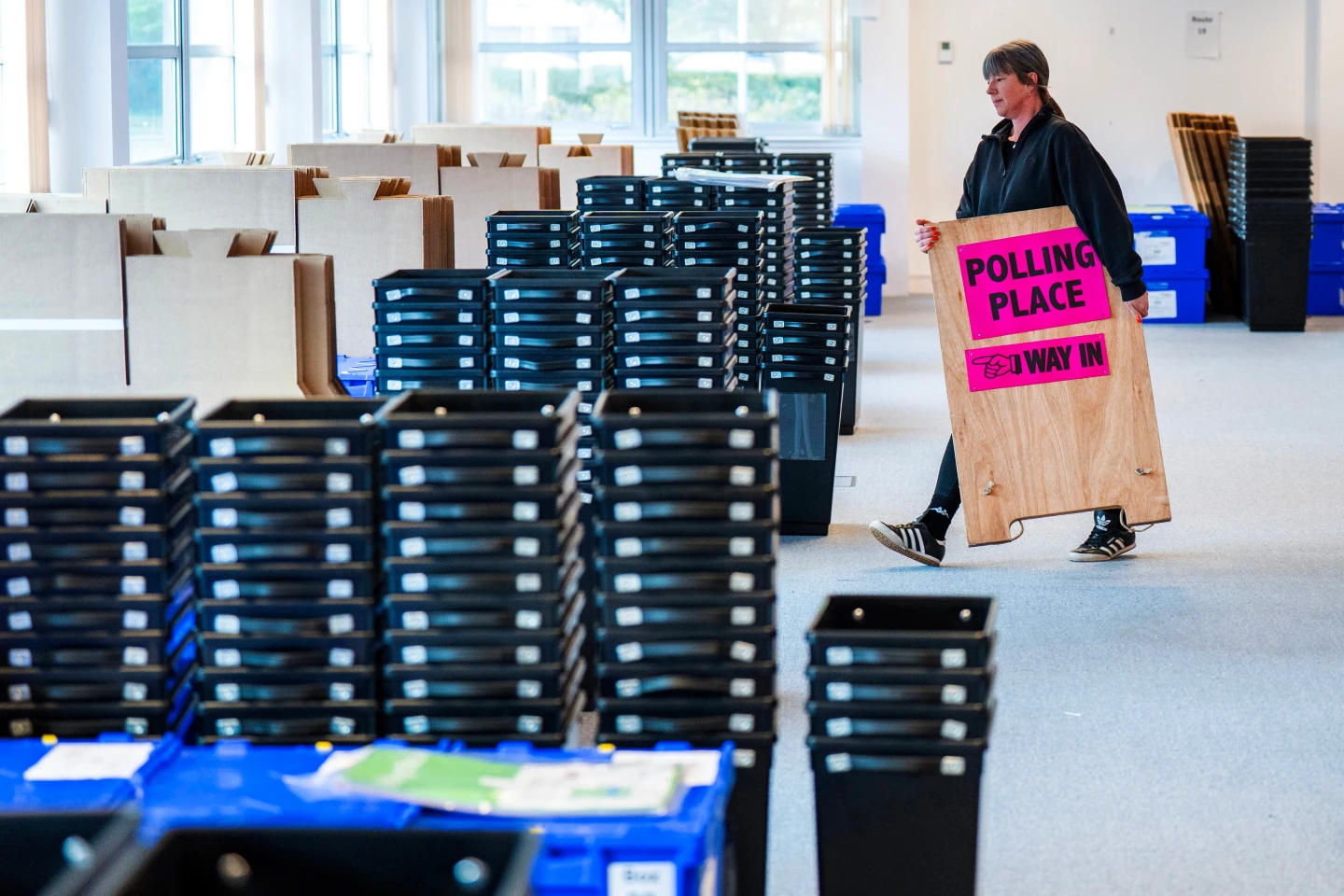
Ballot boxes and signs are dispatched to polling stations around Edinburgh from the Edinburgh City Council Storage area at the Sirius Building in the west of the city ahead of the Scottish Elections on May 7.
Voters across the United Kingdom began casting ballots on Thursday in crucial local and regional elections that could significantly impact Prime Minister Keir Starmer’s political future. While local elections traditionally focus on community concerns such as public services and infrastructure, this year’s contests have taken on broader national importance as dissatisfaction with Labour’s leadership continues to grow.
The elections will determine around 5,000 local council seats, several mayoral positions in England, and representatives in the devolved parliaments of Scotland and Wales. Political observers view the outcome as a major test for Starmer less than two years after Labour returned to power.
UK Local Elections Become a Test of Leadership
Labour entered the elections defending thousands of council seats, yet growing frustration within the party has fueled fears of significant losses. Critics argue that Starmer’s government has struggled to deliver on key promises, including improving economic growth, reducing living costs, and rebuilding strained public services.
External pressures have also complicated the government’s agenda. Rising global energy concerns linked to tensions in the Middle East have increased economic uncertainty, placing further strain on households and businesses across Britain.
At the same time, Starmer’s political standing has been weakened by controversy surrounding his appointment of Peter Mandelson as Britain’s ambassador to Washington. The decision triggered criticism both inside and outside Labour, reviving internal tensions that had already surfaced earlier this year.
Growing Pressure Inside Labour
The possibility of heavy losses in the UK local elections has intensified speculation about Starmer’s future as party leader. Some Labour lawmakers have already expressed doubts about his long-term leadership prospects, with concerns growing that another poor electoral performance could spark renewed calls for change.
Although Starmer survived earlier internal unrest, party members remain uneasy about Labour’s declining popularity. Political analysts suggest that even if he remains in office after the elections, questions may continue over whether he can lead Labour into the next general election.
Reform UK Emerges as Major Challenger
One of the biggest developments in these elections has been the rise of Reform UK, led by Nigel Farage. The party has targeted former Labour strongholds by focusing heavily on anti-establishment and anti-immigration messaging.
Reform UK is expected to perform strongly in working-class areas across northern England and parts of outer London. Farage has openly framed the elections as a turning point for British politics, arguing that a strong result for his party would further weaken Starmer’s position.
Meanwhile, the Green Party is also projected to make gains, particularly in urban areas and university towns where environmental and progressive policies continue to attract younger voters.
Traditional Parties Face Fragmented Landscape
The elections also reflect broader changes in Britain’s political landscape. Both Labour and the Conservative Party appear vulnerable as smaller parties continue to expand their influence.
The Conservatives are expected to lose seats as well, while the Liberal Democrats hope to capitalize on dissatisfaction with both major parties. Analysts believe the results could highlight the continuing erosion of the traditional two-party system that has dominated British politics for decades.
Political experts note that Labour now faces challenges from multiple directions, making the electoral battle more complicated than in previous years. In England, Scotland, and Wales, the party is competing against a diverse range of opponents with increasingly localized support bases.
A Defining Political Moment
As counting begins following the close of polls, attention will quickly shift toward what the results mean for Starmer’s leadership and Labour’s broader political strategy.
The outcome of the UK local elections may not immediately determine the government’s future, but it is likely to shape the political narrative for months ahead. For Starmer, the elections represent more than a routine midterm vote — they could become a defining moment in his premiership.